LegalPlayWay
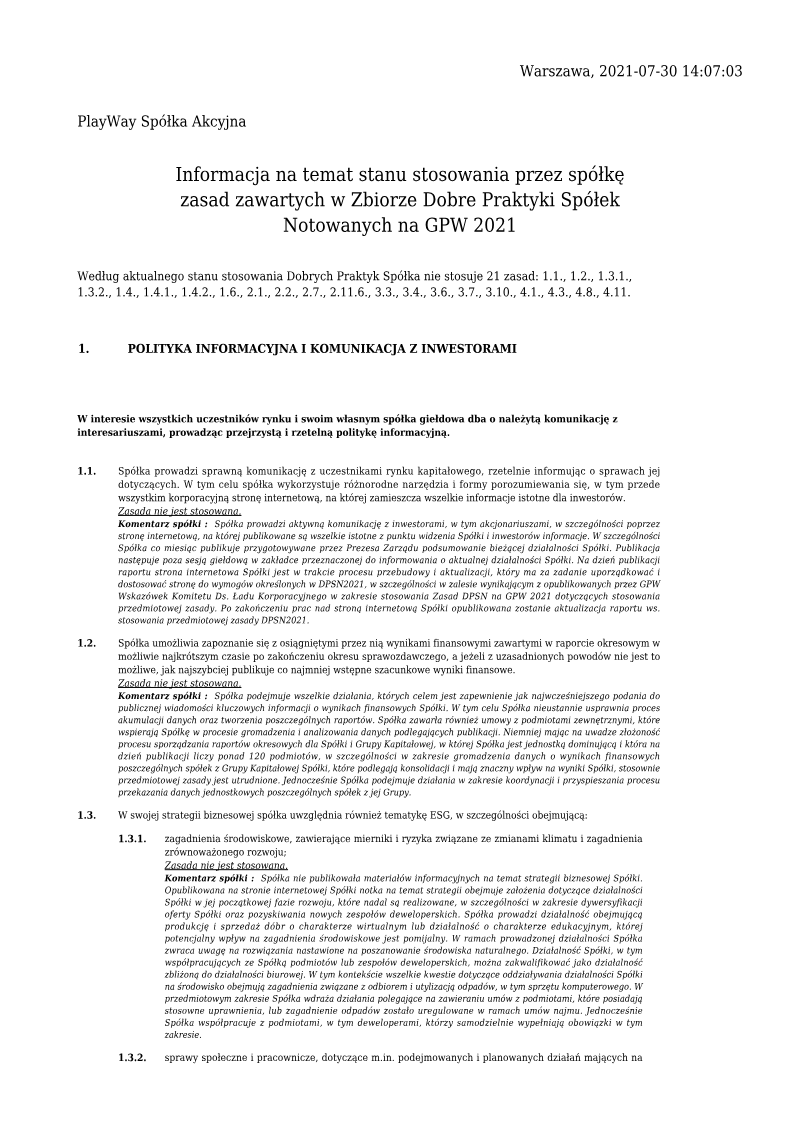
PlayWay S.A. Good Practices of GPW-Listed Companies 2021 Compliance Statement
30 Jul 20219 pages~36 min full read
PlayWay S.A. maintains a selective approach to the Best Practice for GPW Listed Companies 2021, reporting non-compliance with twenty-one specific principles as of July 2021. The company attributes these deviations primarily to its decentralized business model, which encompasses a capital group of approximately 120 entities. Significant gaps exist in the formalization of environmental, social, and governance strategies, as well as the absence of a documented diversity policy. Currently, the management and supervisory boards do not meet the recommended 30% minority representation threshold, though the company asserts that appointments remain based on qualifications and professional experience.
Operational oversight and risk management are handled directly by the Management Board rather than through segregated organizational units or dedicated internal auditors. This centralized structure extends to shareholder engagement, where the company opts against electronic participation or live streaming of General Meetings due to perceived technical costs and limited shareholder demand. Despite these omissions, transparency is maintained through monthly operational summaries, detailed resolution justifications, and a commitment to updating corporate web portals to meet evolving transparency requirements.
The company demonstrates full alignment with remuneration standards, emphasizing pay equity and gender equality across its leadership roles. While no formal stock option or incentive programs are currently in place, there is a commitment to link future variable compensation to long-term financial performance and sustainable development goals. Supervisory Board compensation remains fixed and independent of short-term results, ensuring objective oversight. Ultimately, the company balances its rapid growth and complex organizational structure by prioritizing essential transparency and independence standards while deferring more formalized reporting and specialized oversight roles until they are deemed necessary for its scale.
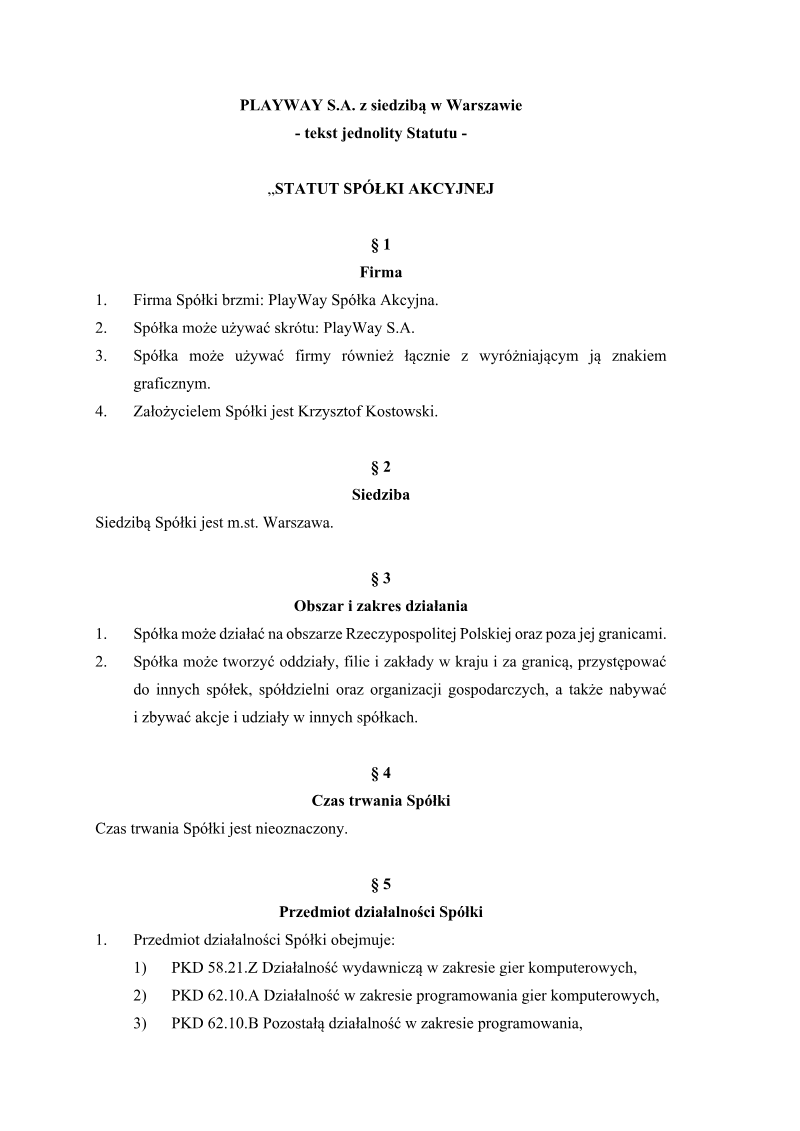
PlayWay · 2026
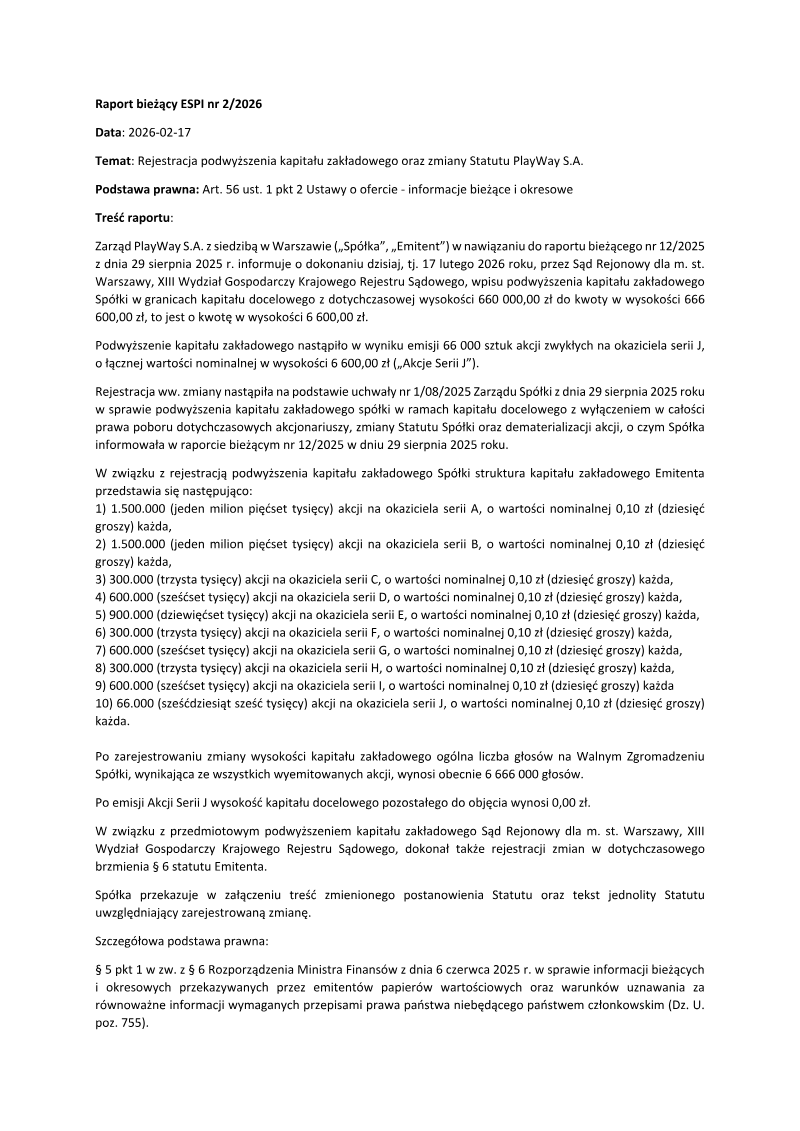
PlayWay · 2026
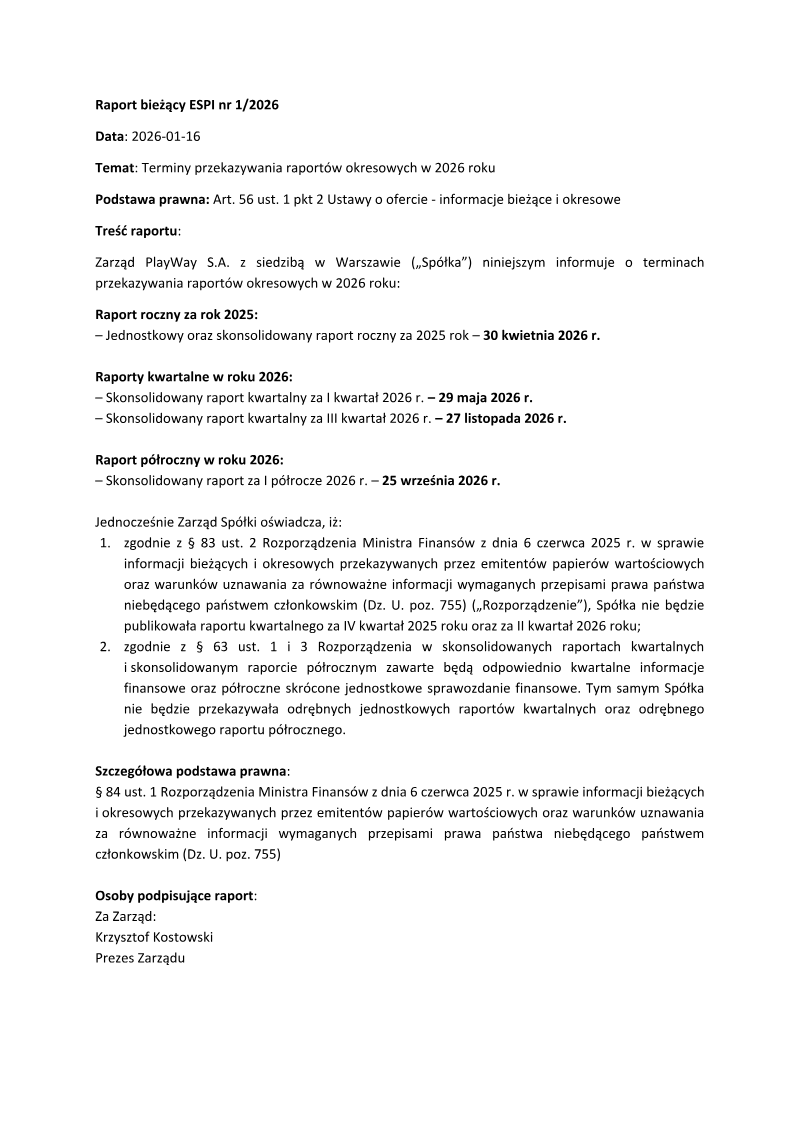
PlayWay · 2026
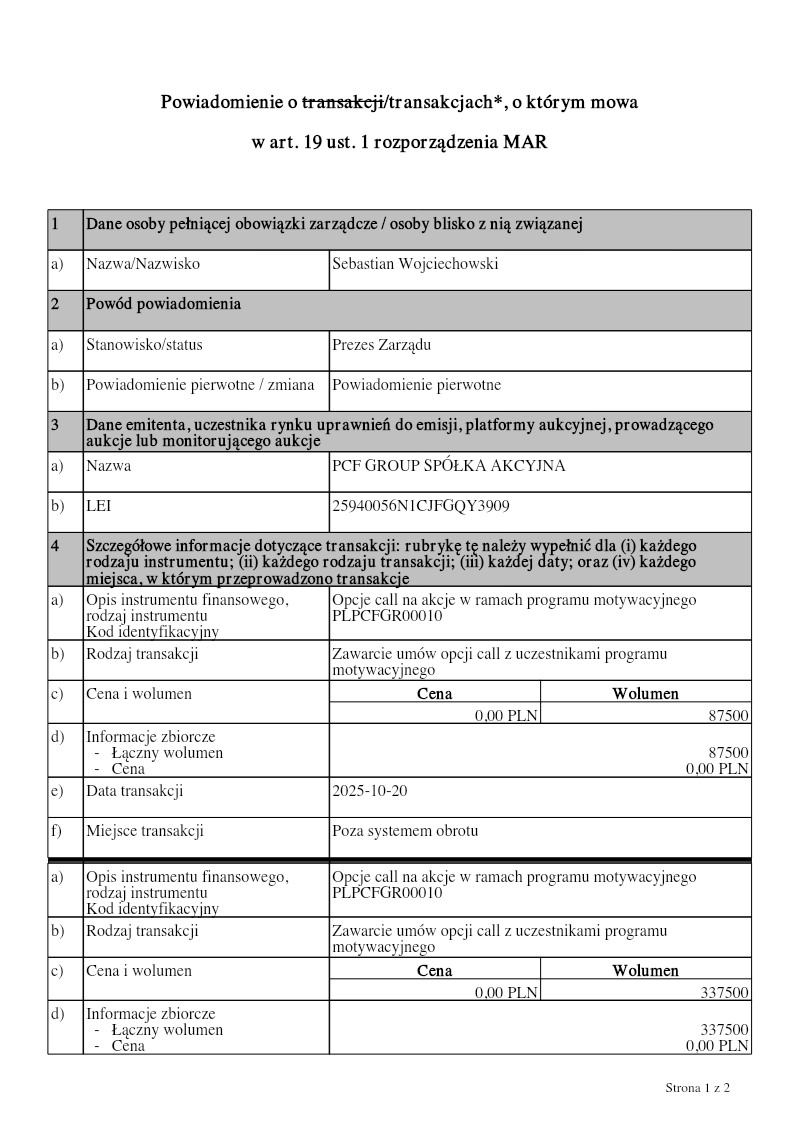
PCF Group · 2025
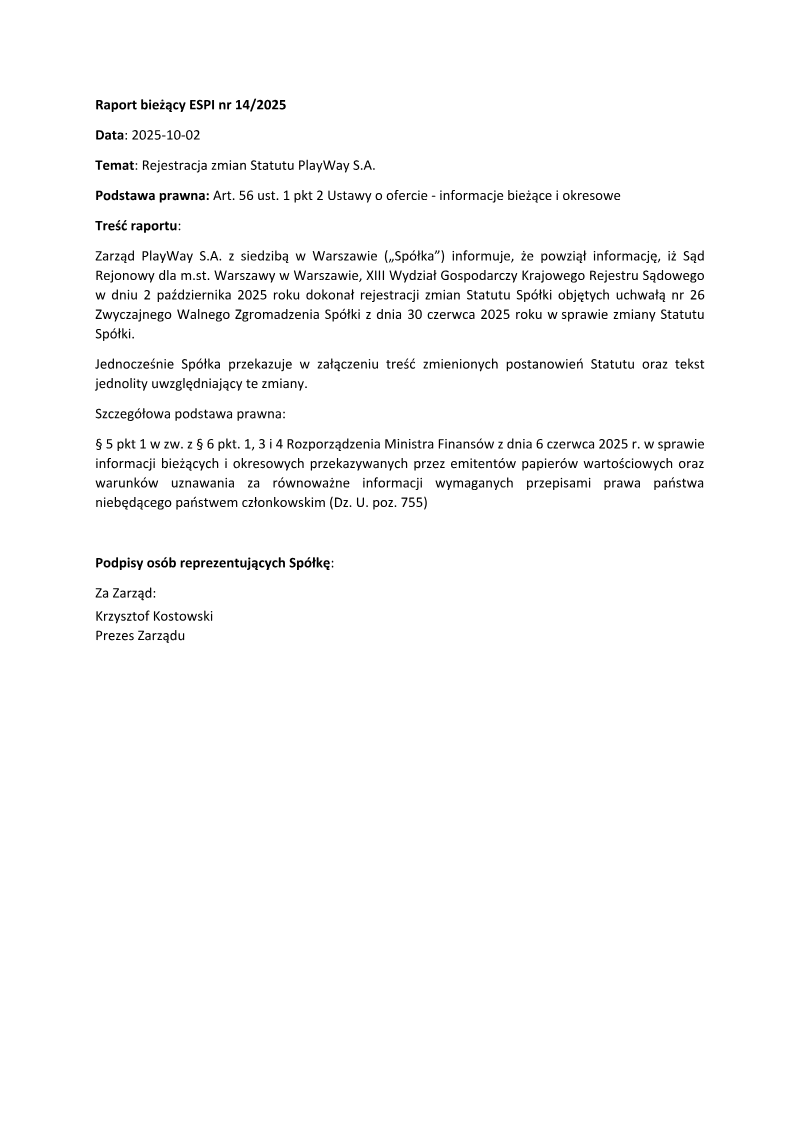
PlayWay · 2025
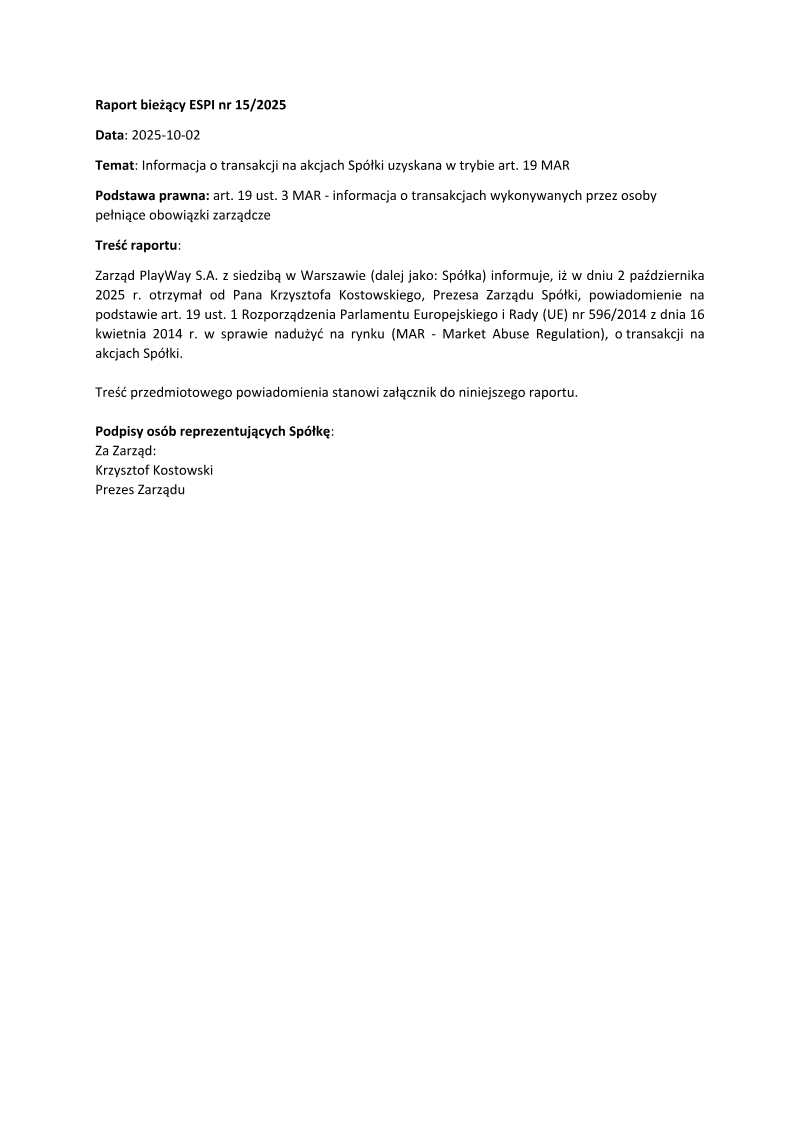
PlayWay · 2025
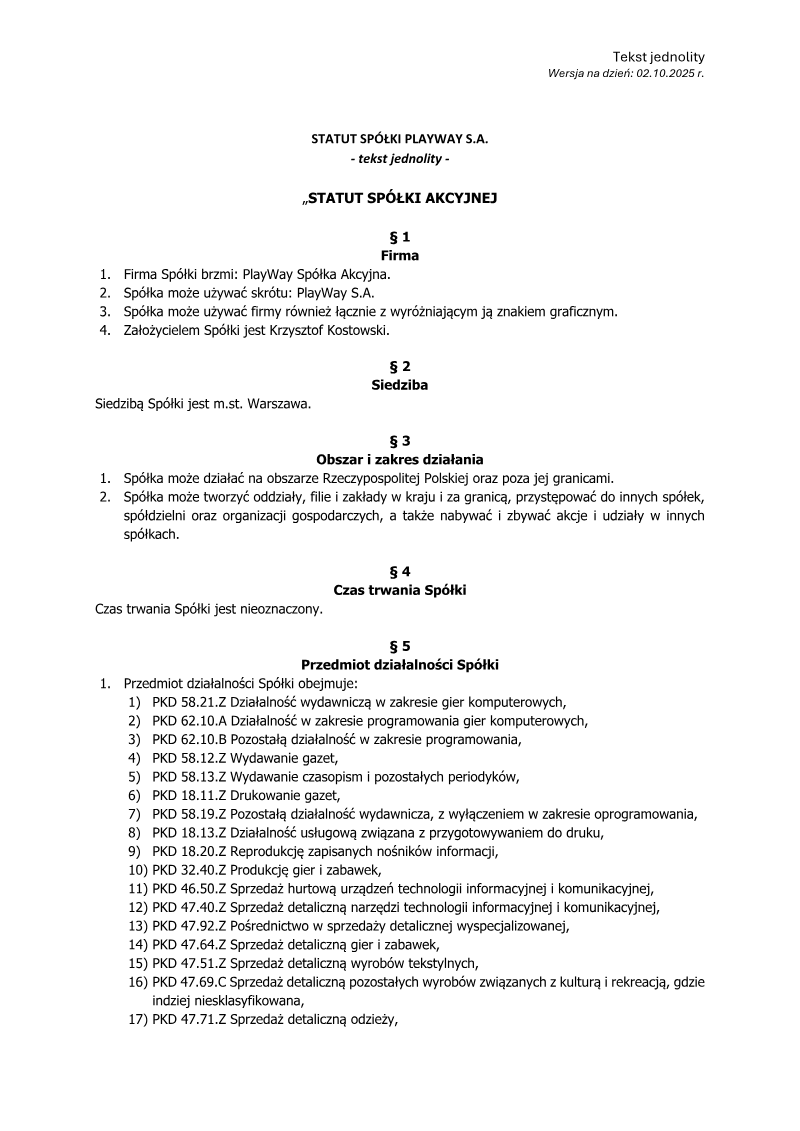
PlayWay · 2025
PlayWay · 2025
PlayWay · 2025
PlayWay · 2025
PlayWay · 2025
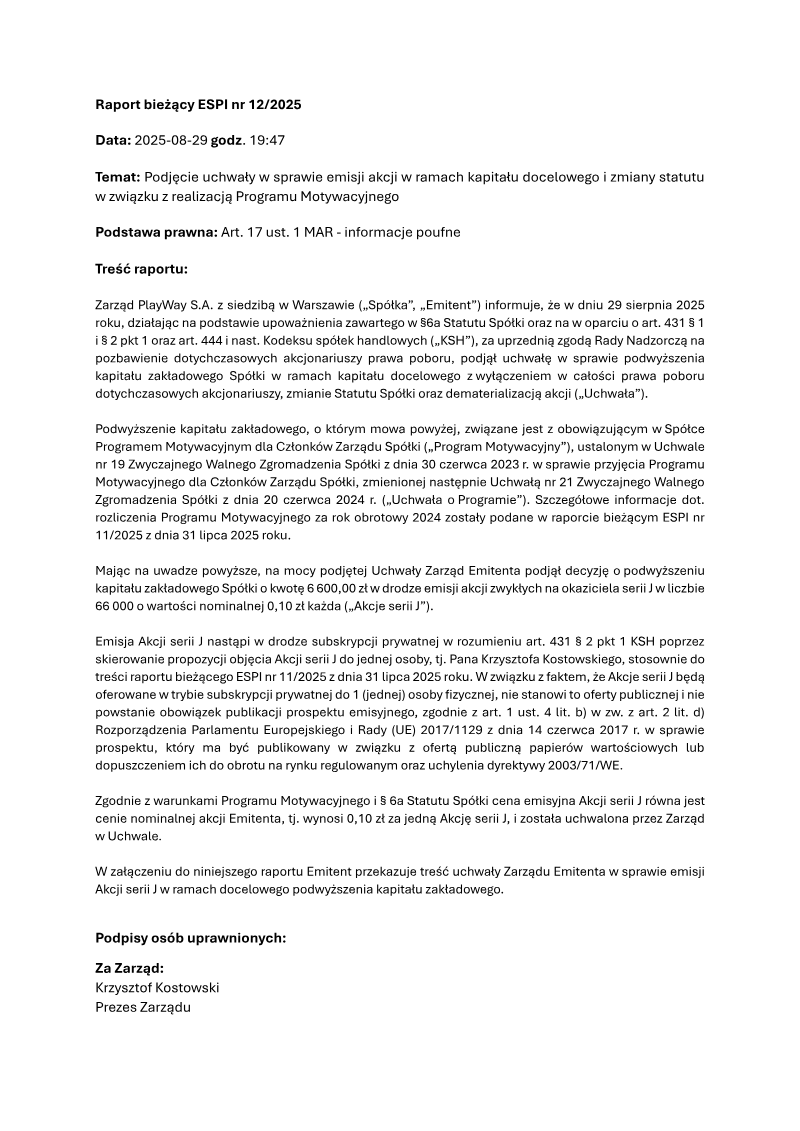
PlayWay · 2025
PCF Group · 2025
11 bit studios · 2025
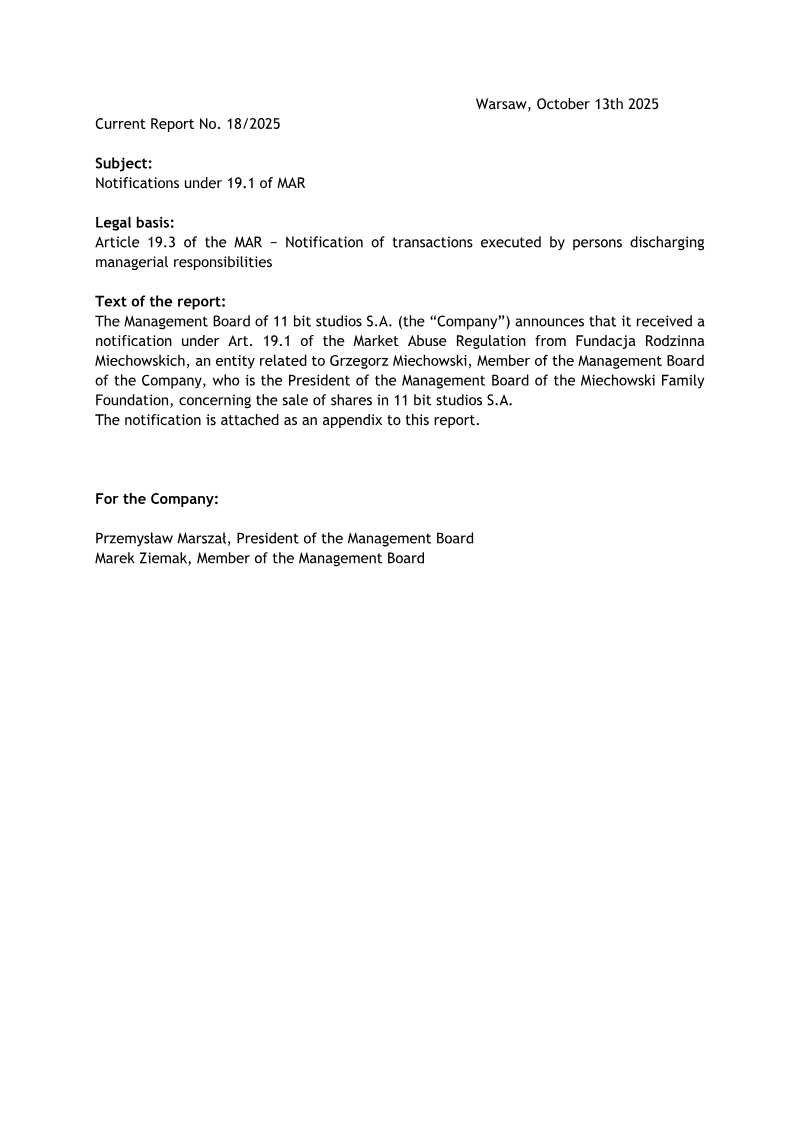
11 bit studios · 2025
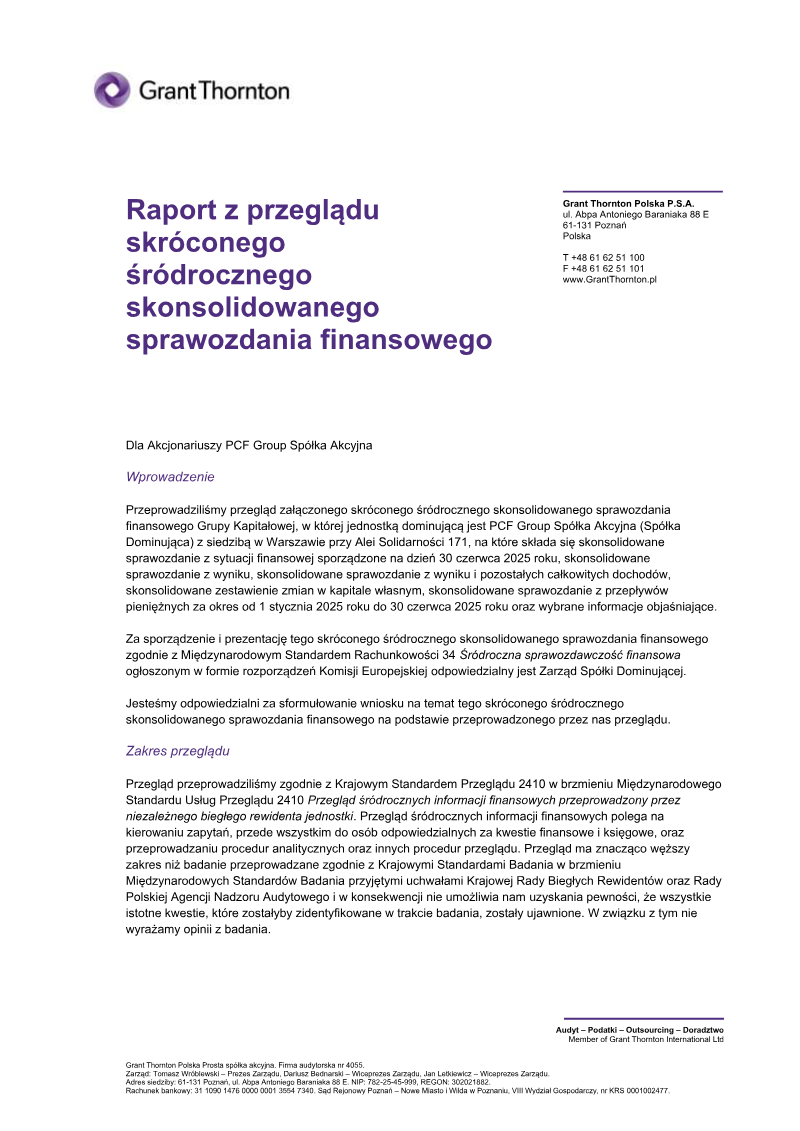
Grant Thornton · 2025
PCF Group · 2025
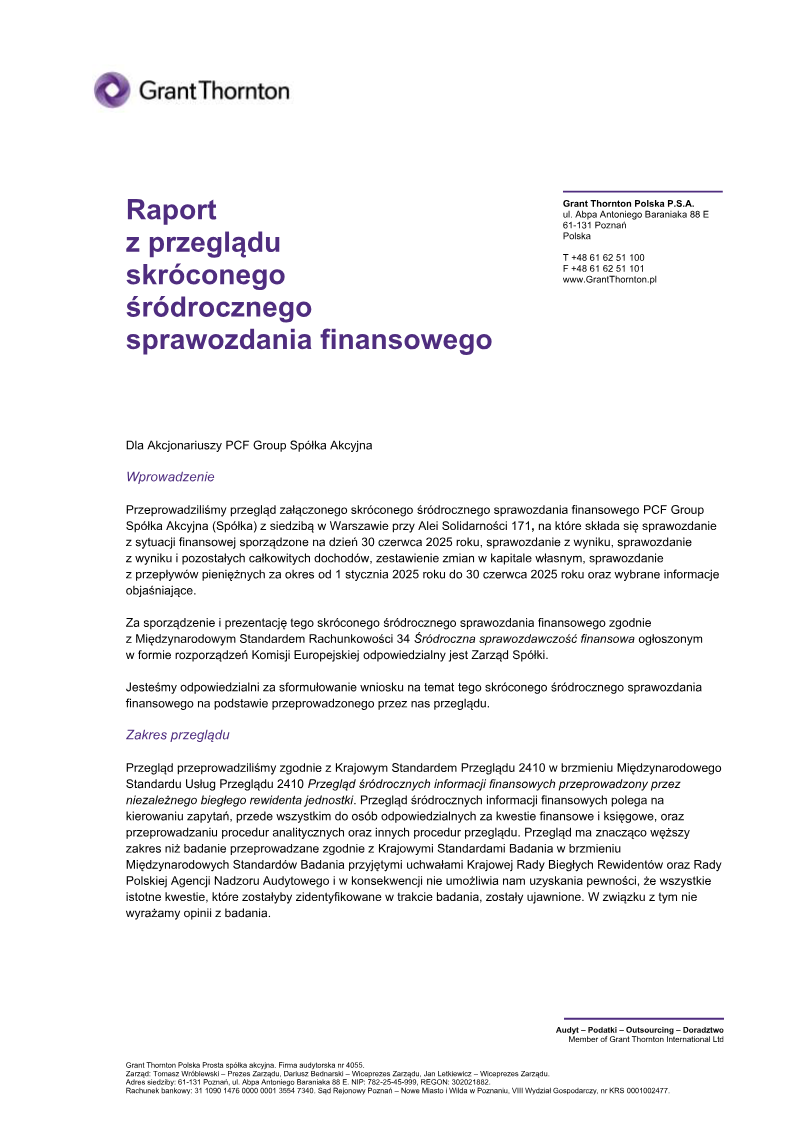
Grant Thornton · 2025
People Can Fly Group · 2025
PCF Group · 2025
11 bit studios · 2025
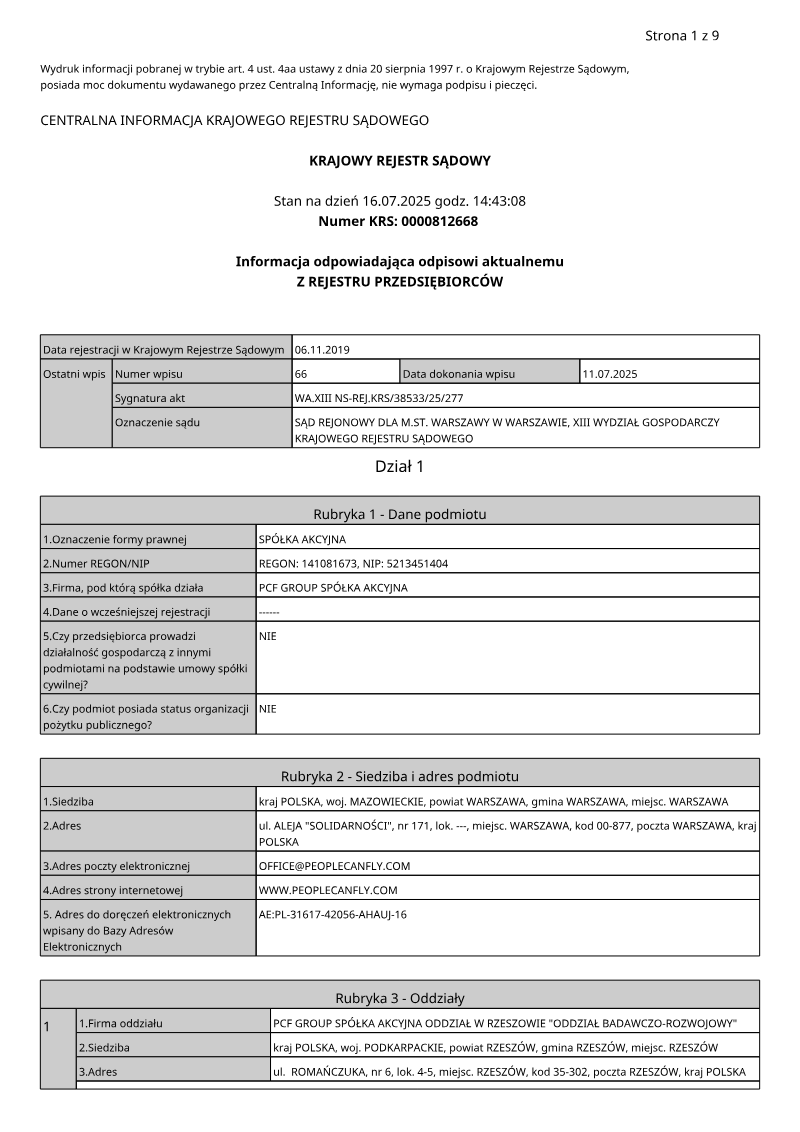
Centralna Informacja Krajowego Rejestru Sądowego · 2025
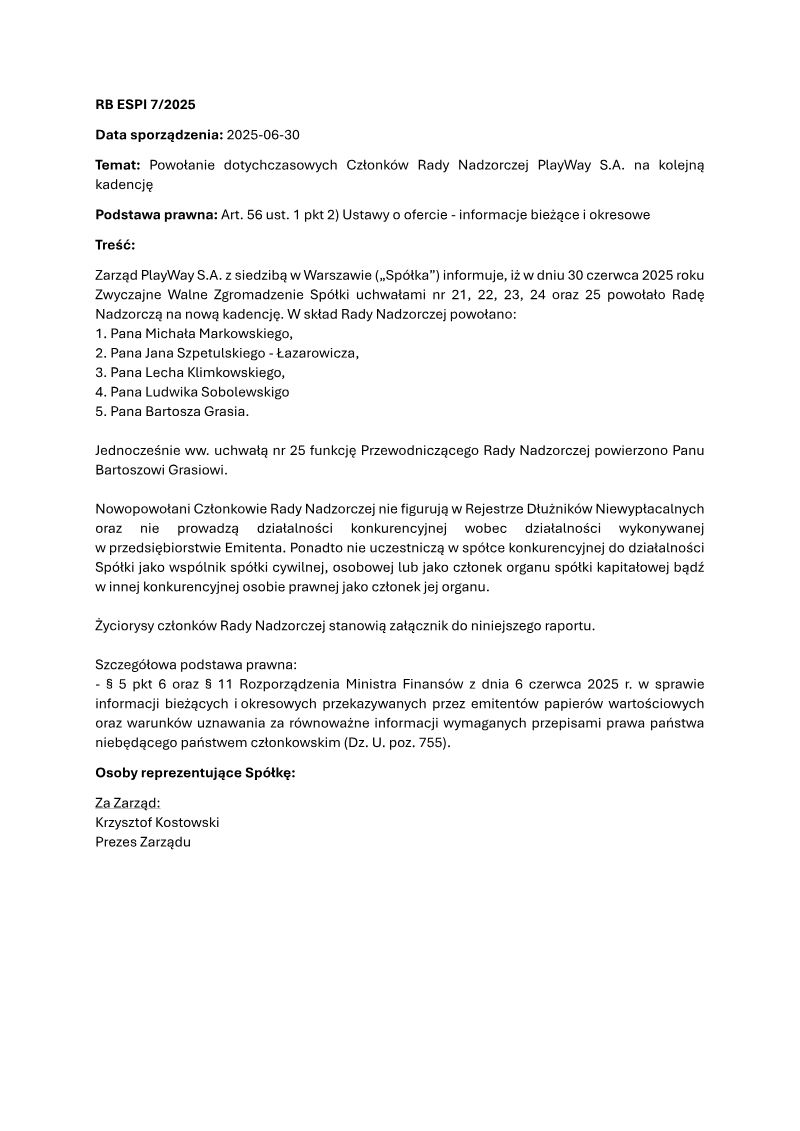
PlayWay · 2025
PlayWay · 2025