FinancialCyberAgent
FY2023 Second Quarter Consolidated Financial Results: Japanese GAAP
1 Apr 202310 pages~17 min full read
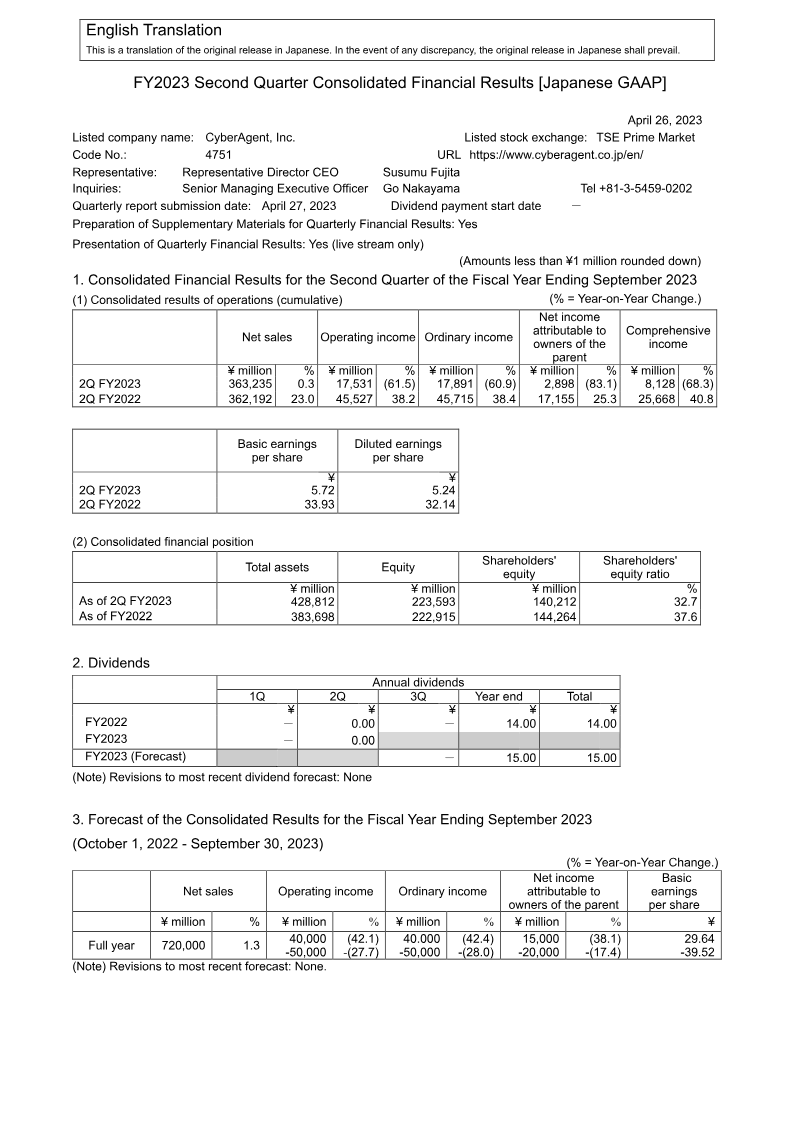
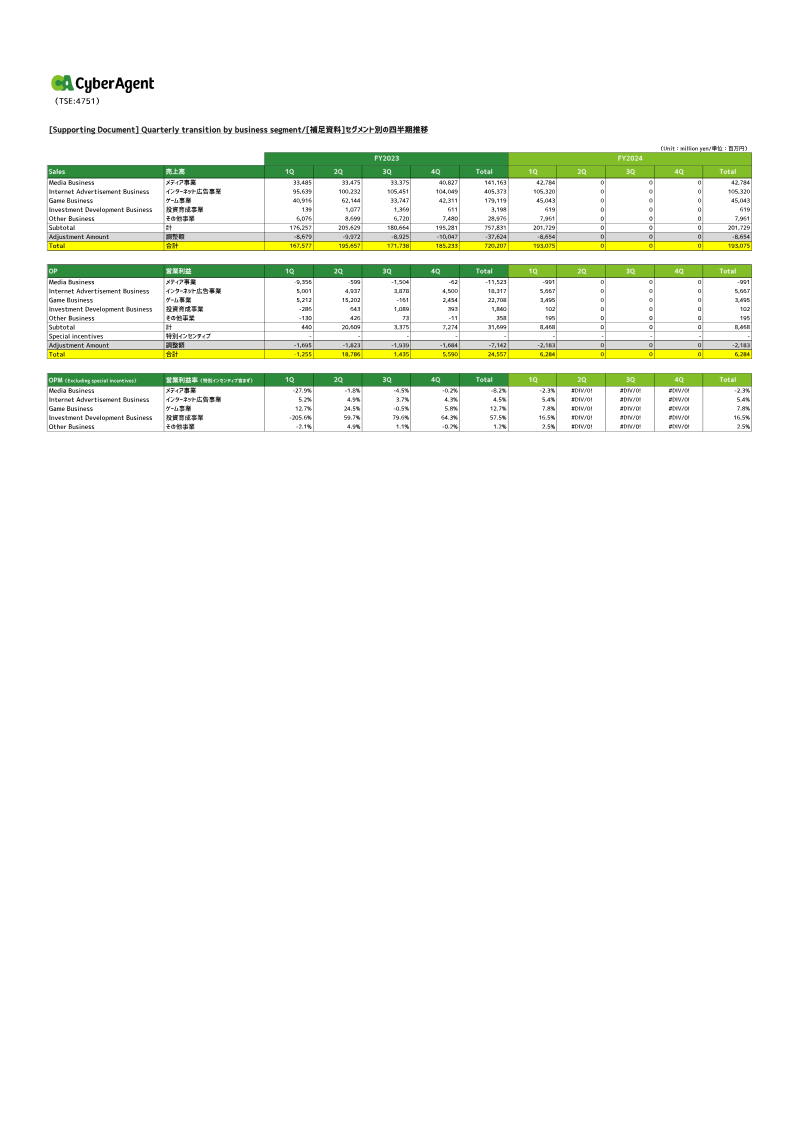
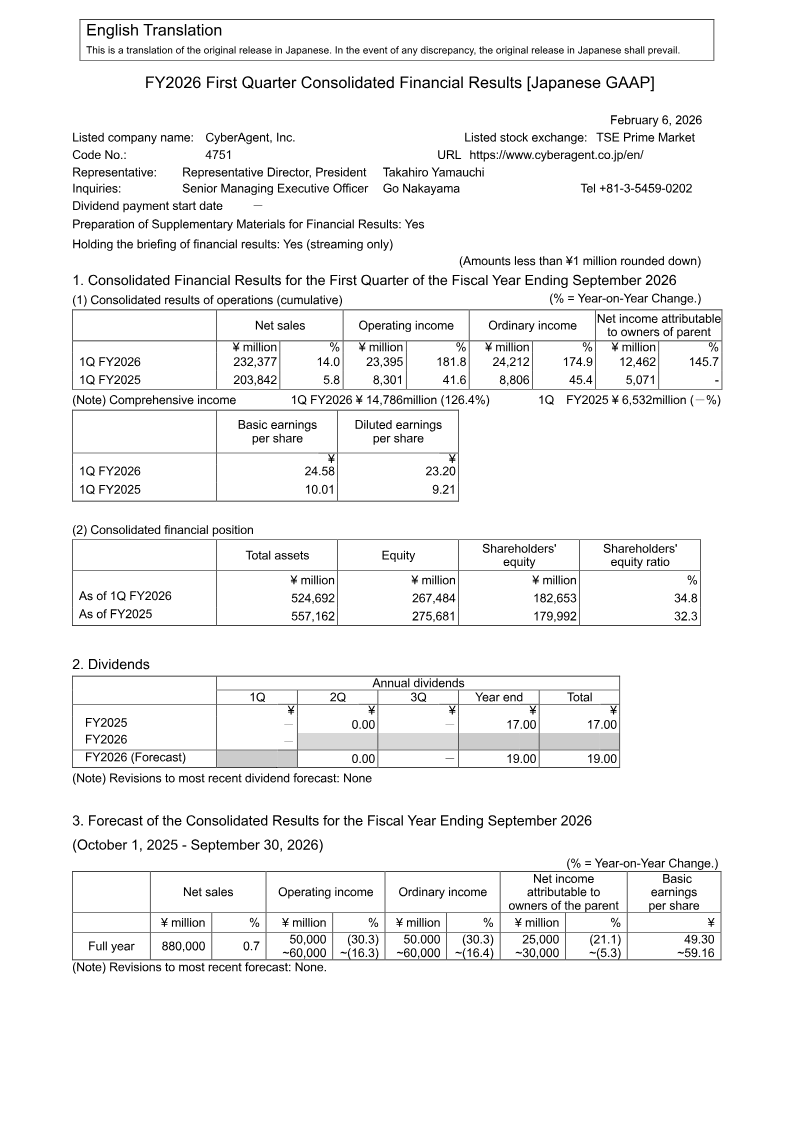
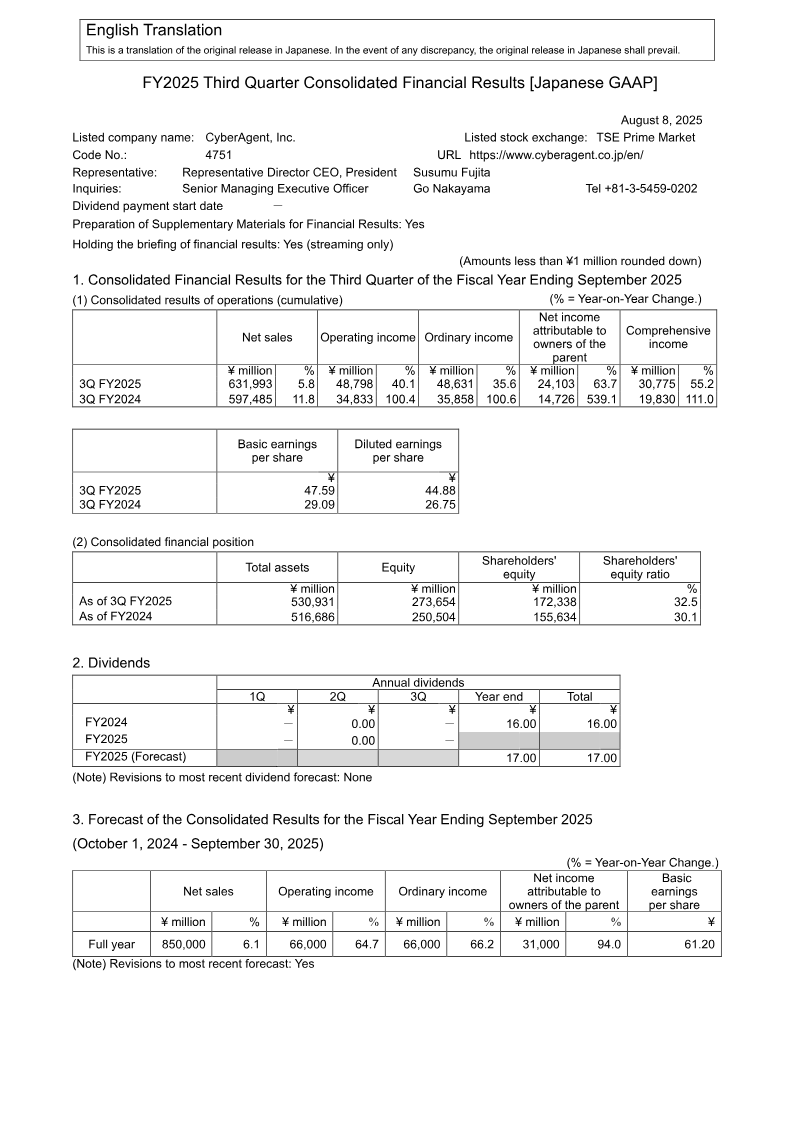
CyberAgent’s financial performance for the second quarter of fiscal year 2023 reflects a period of revenue stability contrasted by significant profit compression. Consolidated net sales remained nearly flat at ¥363.2 billion, representing a marginal 0.3% year-over-year increase. However, operating income experienced a sharp 61.5% decline, falling to ¥17.5 billion from ¥45.5 billion in the prior year. This contraction was primarily driven by a 47% drop in Game Business income and heightened operating losses within the Media Business, the latter of which was impacted by the substantial costs associated with distributing the FIFA World Cup Qatar 2022.
The Game Business remains a cornerstone of the company’s portfolio despite its segment income decreasing from ¥38.5 billion to ¥17.3 billion. Simultaneously, the Internet Media segment demonstrated revenue growth, though it continued to operate at a loss. Total assets expanded to ¥428.8 billion, supported by a robust cash position of ¥185.3 billion. This liquidity was significantly bolstered by the strategic issuance of ¥40.5 billion in convertible bonds, providing a financial cushion despite rising selling, general, and administrative expenses.
While the company faced immediate downward pressure on profitability due to high-profile content investments and shifting performance in the gaming sector, it has maintained its full-year financial forecasts. The results indicate a transition phase where the company is balancing long-term media expansion with the volatility of its core gaming assets. After accounting for ¥3.5 billion in unallocable corporate administrative expenses, the final consolidated operating income confirms a challenging but stable fiscal position as the company navigates its current investment cycle.
CyberAgent · 2026
CyberAgent · 2026
CyberAgent · 2026
CyberAgent · 2026
CyberAgent · 2025
CyberAgent · 2025
CyberAgent · 2025
CyberAgent · 2025
CyberAgent · 2025
CyberAgent · 2025
CyberAgent · 2025
CyberAgent · 2025
Capcom · 2026
Capcom Co. · 2026
Capcom · 2026
Sony Group Corporation · 2026

Square Enix · 2026
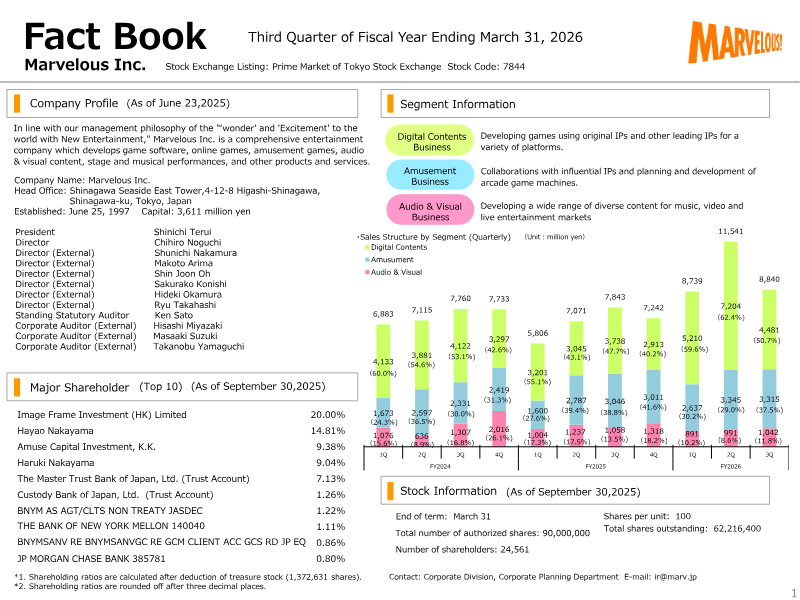
Marvelous · 2026
Square Enix · 2026
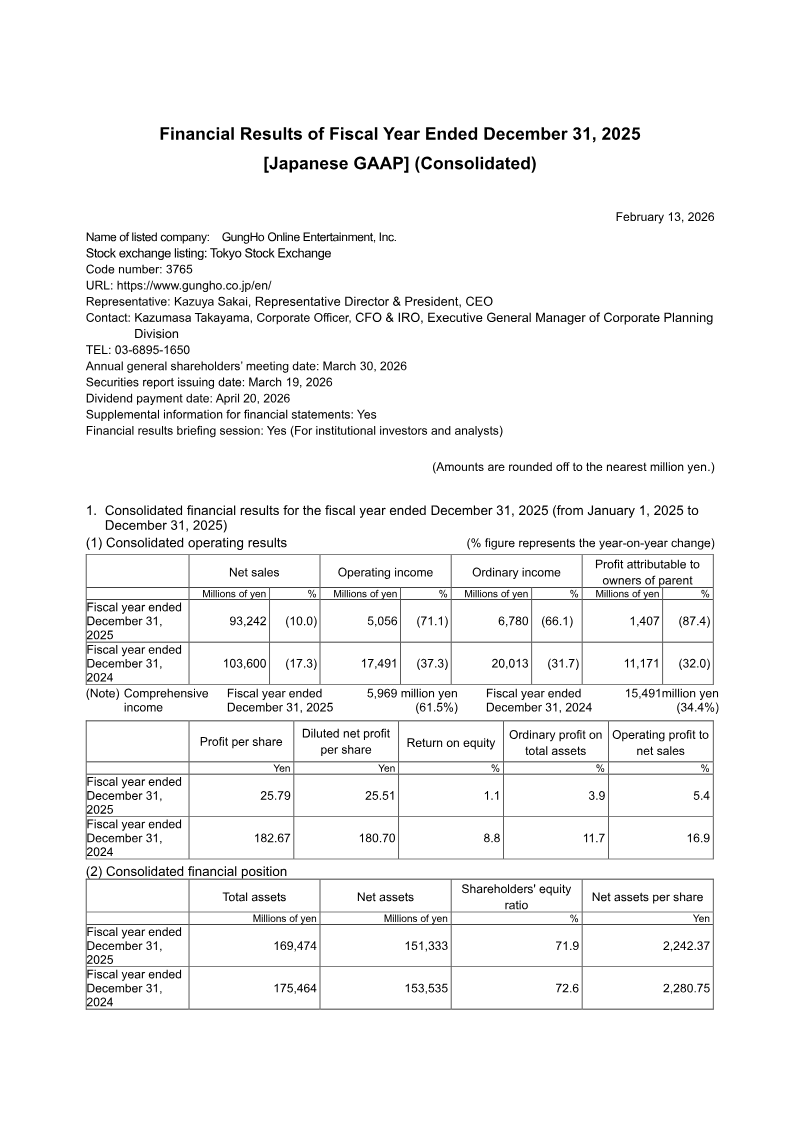
GungHo Online Entertainment · 2026
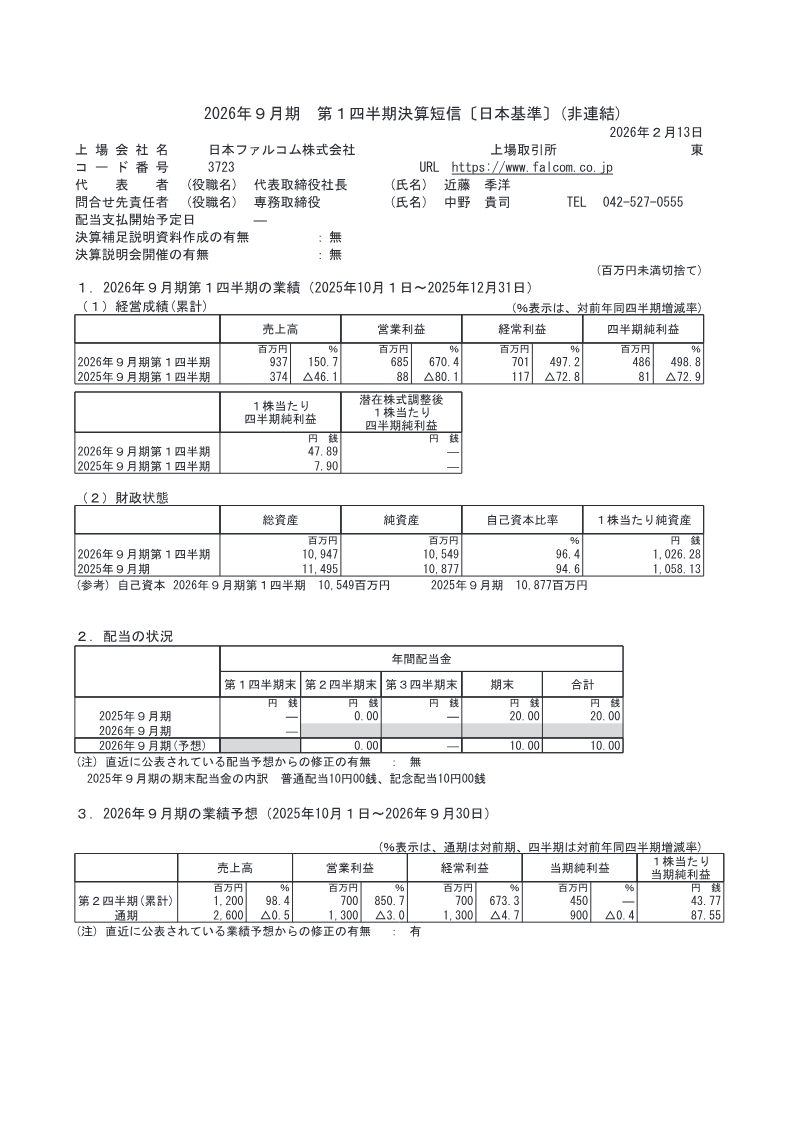
Nihon Falcom Corporation · 2026
Sega Sammy Holdings · 2026
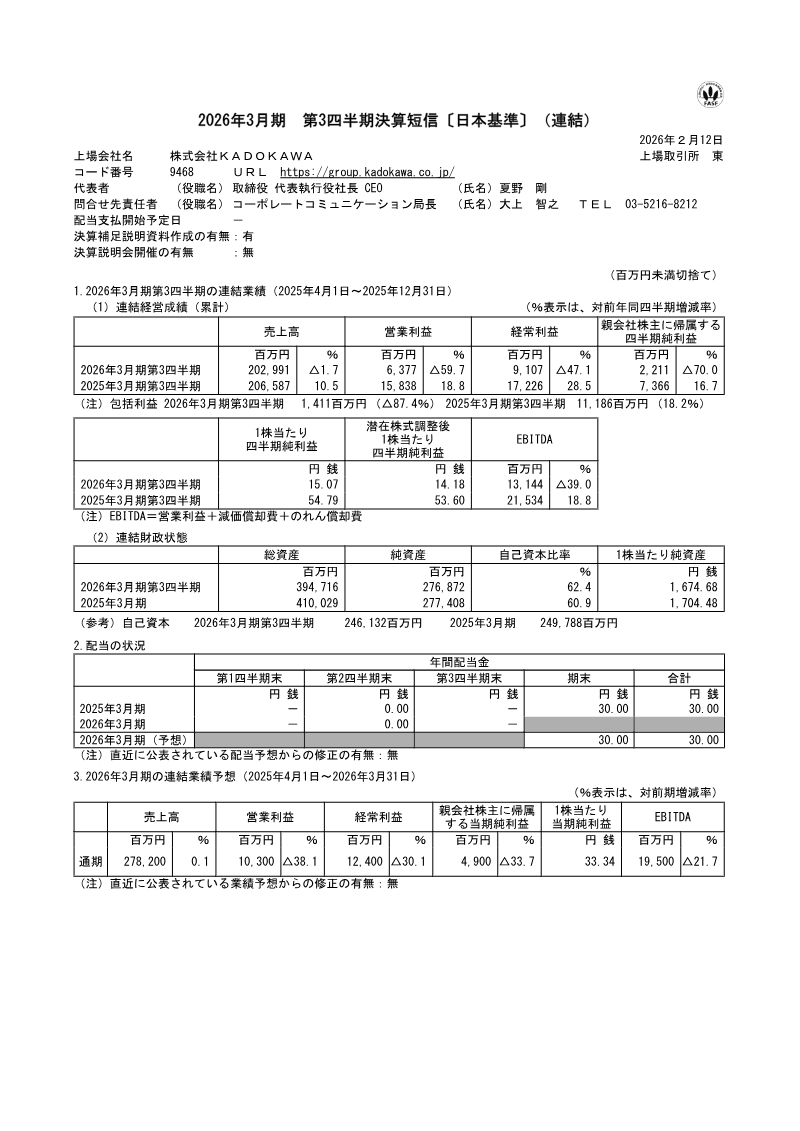
Kadokawa Corporation · 2026
Akatsuki · 2026