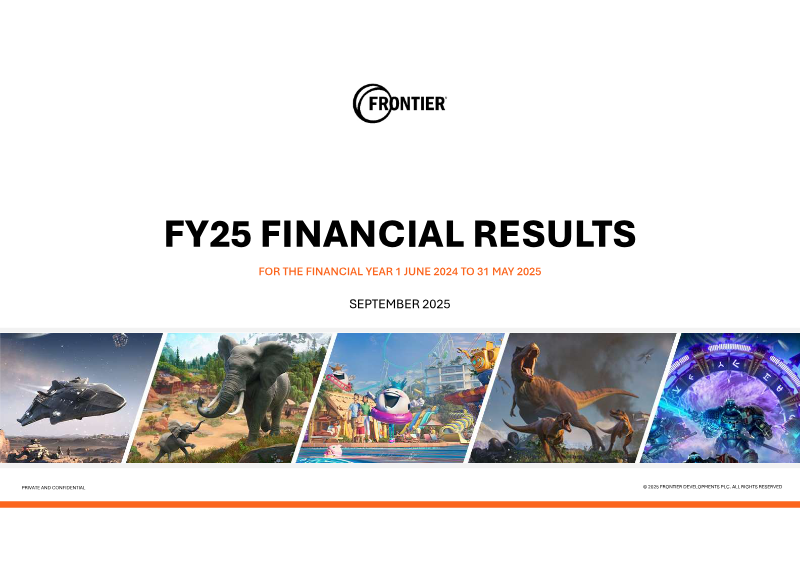
Key insights
6 takeaways · ~2 min read- 01Post-release downloadable content (PDLC) continues to be a significant revenue driver, accounting for 36% of total revenue in FY25, a slight increase from 35% in FY24.See it on page 5
- 02The Jurassic World Evolution franchise was a major contributor to revenue, making up 27% of total revenue in FY25 and growing 76% year-over-year, with PDLC revenue increasing by almost 150%.See it on page 10
- 03Underlying revenue, excluding subscription deals, grew by 11% in FY25.See it on page 17
- 04The company's core franchises (Planet Zoo, Jurassic World Evolution, and Elite Dangerous) all experienced strong years, with Planet Coaster 2's player sentiment improving ahead of a planned monetization reboot.See it on page 2
- 05The company has a strong roadmap with three future games: Jurassic World Evolution 3 (FY26) and two additional CMS games (FY27 & FY28).See it on page 2
- 06Subscription revenue for Elite Planet Coaster decreased to 5% of total revenue in FY25, down from 13% in FY24.See it on page 8
Summary
The information contained in this confidential the account or benefit of, U.S. Persons (as defined in or advisers take any responsibility for, or will accept any shareholders, directors, officers, agents, employees or by Frontier Developments plc (the "Company"). from the registration requirements of the Securities This Presentation has not been approved by an authorised Act and applicable state securities laws.
Cite this report
Citation
Generating citation…