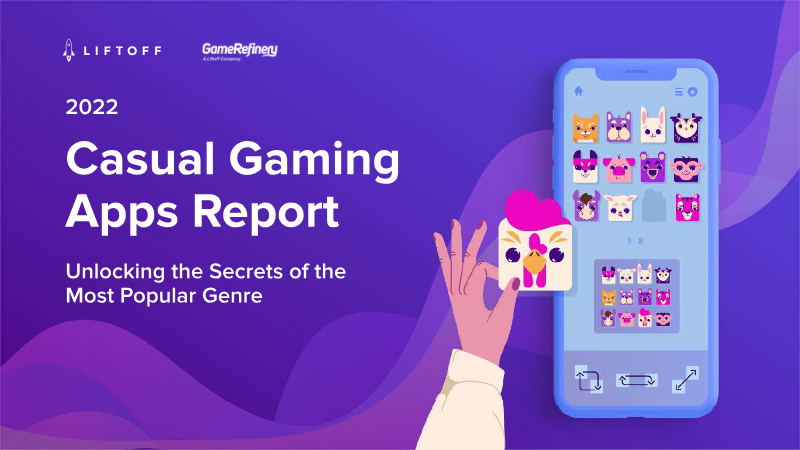
The mobile gaming landscape entered a period of transition in early 2022, marked by the first year-over-year decline in global spending during the first quarter. Despite this contraction, mobile gaming remains the dominant force in the industry, commanding over 60% of the total market share. Analysis of performance metrics from May 2021 to May 2022 reveals an average cost per install (CPI) of $1.10 and a Day 30 return on ad spend (ROAS) of 17.81%. Lifestyle games emerged as a particularly lucrative segment, generating the highest returns for developers despite carrying higher-than-average acquisition costs.
Platform and regional disparities significantly influence user acquisition strategies. Android remains the more cost-effective platform with an average CPI of $0.75, which is less than half of the $2.27 required on iOS. Notably, both platforms maintain comparable ROAS at the Day 7 and Day 30 marks, suggesting that Android offers superior efficiency for many casual titles. Geographically, North America represents the most expensive market with a CPI of $3.32, while the LATAM and APAC regions provide the most affordable entry points. However, lower acquisition costs in LATAM are often offset by lower overall returns compared to more established markets.
To maintain long-term player investment and monetization, top-grossing casual games increasingly utilize hybrid mechanics. By blending core puzzle or rhythm gameplay with secondary layers like interior design or social competition, developers are successfully extending player lifecycles. These findings, derived from an extensive dataset of 76.1 billion impressions and 58.5 million installs, underscore a shift toward sophisticated, multi-layered game design as a primary driver for growth in an increasingly competitive and price-sensitive mobile environment.
GameRefinery · 2026

GameRefinery · 2026

GameRefinery · 2026

GameRefinery · 2026
GameRefinery · 2026

GameRefinery · 2025
GameRefinery · 2024
Liftoff · 2024
GameRefinery · 2023
GameRefinery · 2023
GameRefinery · 2023
GameRefinery · 2023
AppMagic · 2026
AppMagic · 2025
AppMagic · 2025
Liftoff · 2024
Liftoff · 2023
Apptica · 2022

GameRefinery · 2022

GameRefinery · 2022
Liftoff · 2021
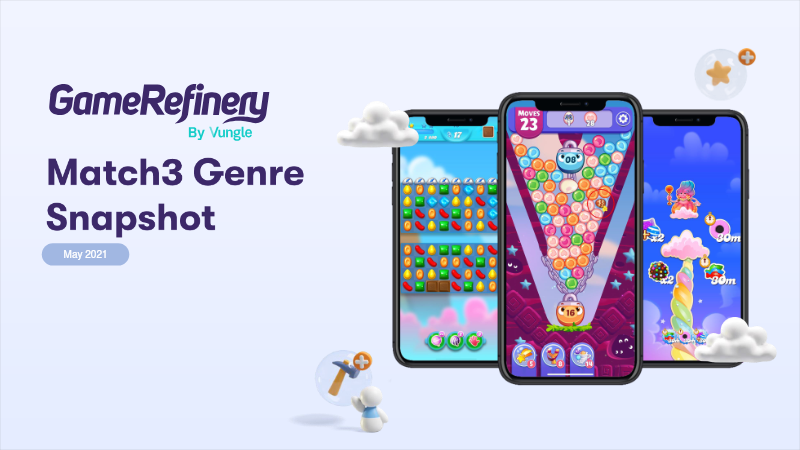
GameRefinery · 2021
IGG · 2014

G5 Entertainment