Loading the document
1 free read left. Create a free account for unlimited reading + AI research.
Create free accountArticle DiGRA
1 free read left. Create a free account for unlimited reading + AI research.
Create free accountArticleDiGRA
The framework describes a player object as a concrete, persistent, integrated point of control through which players act in a virtual environment. The author offers it as an interpretive tool rather than a claim of fundamental truth about games.
Willumsen's work introduces the PO-VE (Player Object – Virtual Environment) model, an analytical framework for understanding "player objects," the concrete, integrated points of control through which players act in a virtual environment. The central thesis is that the widely used concept of the "avatar" is overextended and obscures meaningful differences in how games structure player control. The framework is built inductively from the coding of 99 digital single-player games, with more than 300 initial codes refined down to 83, and is offered as an applicable theory rather than an objective or generalizable truth, given its qualitative, purposive-sampling, and interpretive basis.
The model rests on a distinction between persistent objects, marker objects, and player objects, with player objects defined as a subset of persistent objects that manifest the player's point of control. Three configurations are identified: single, multiple locked, and multiple free points of control. Control may be direct or indirect, and alterations to attributes can change available actions without creating a new object. Characterisation is treated separately from objects, requiring figurative attributes, roles and relationships, and motivations for a player to mentally construct a character.
The PO-VE model organizes 16 categories into five groupings: basic configuration, player object in virtual environment, characterisation, customisation, and view of the environment. Types within each category are mutually exclusive, and the model is applied to a game's default mode, with other modes coded separately. Applied to The Witcher III and VVVVVV, it reveals contrasts in point-of-control configuration, dimensionality, customisation, and camera perspective, even though both feature health and characterised player objects.
The author concedes that the model's granularity may be excessive for some analyses, yet argues it works as a pragmatic tool for exposing the complexity of player objects. It could potentially extend to "user objects" in other digital media. The scope is limited to single-player digital games, drawing on game studies scholarship from roughly 2003 to 2019 and a ludography spanning titles from Tomb Raider (1996) to N++ (2018).
Each row is a game or company this document names, each column a document, oldest first. A mark means that document names it. Select a row to see those documents.
DiGRA · 2026
DiGRA · 2026
DiGRA · 2026
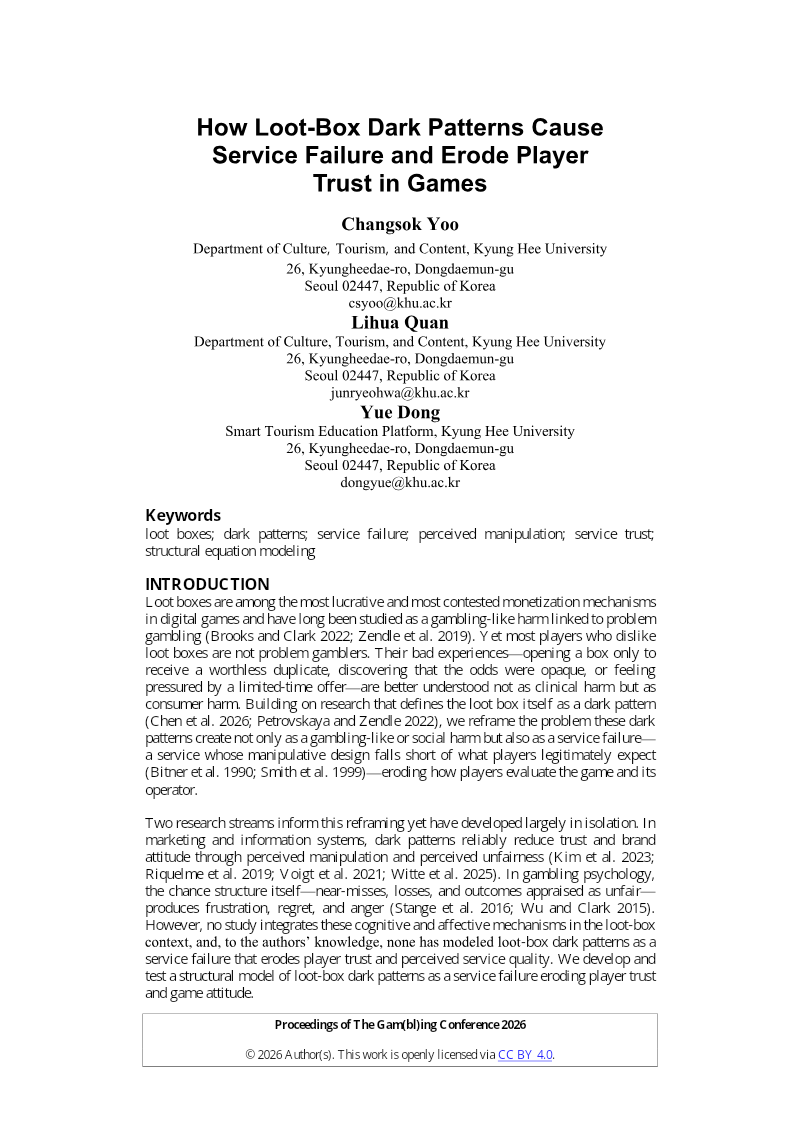
DiGRA · 2026
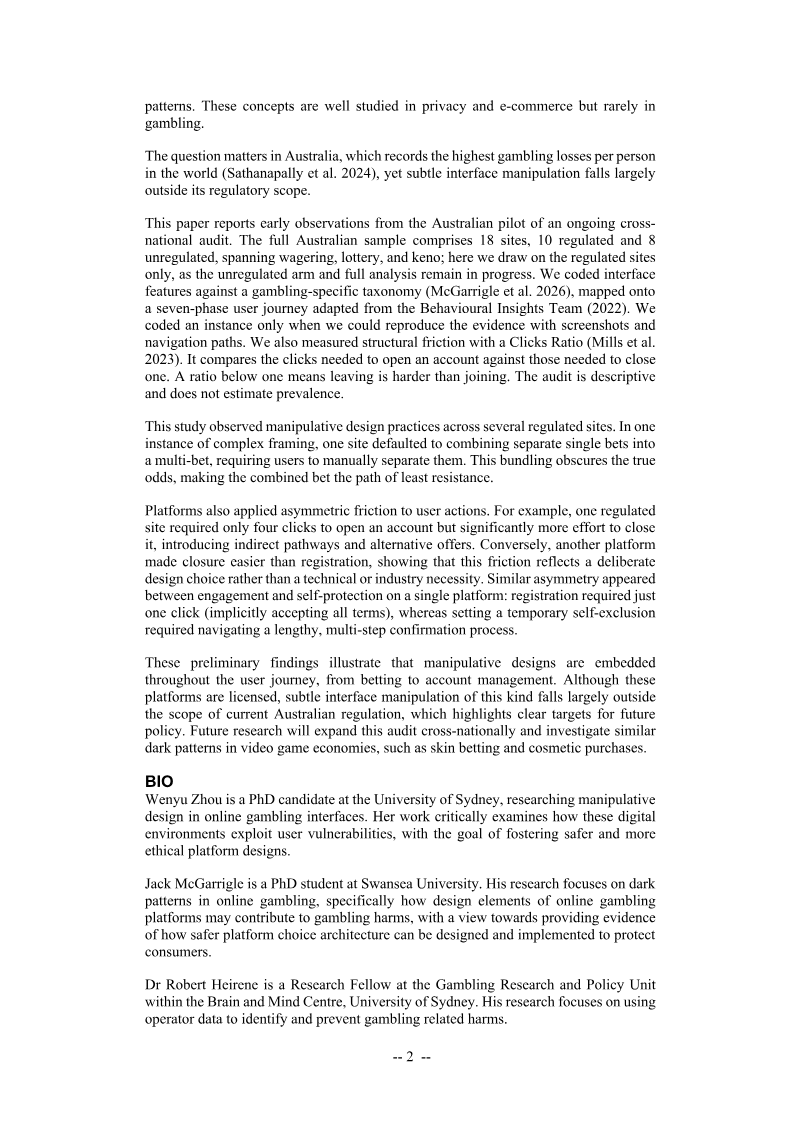
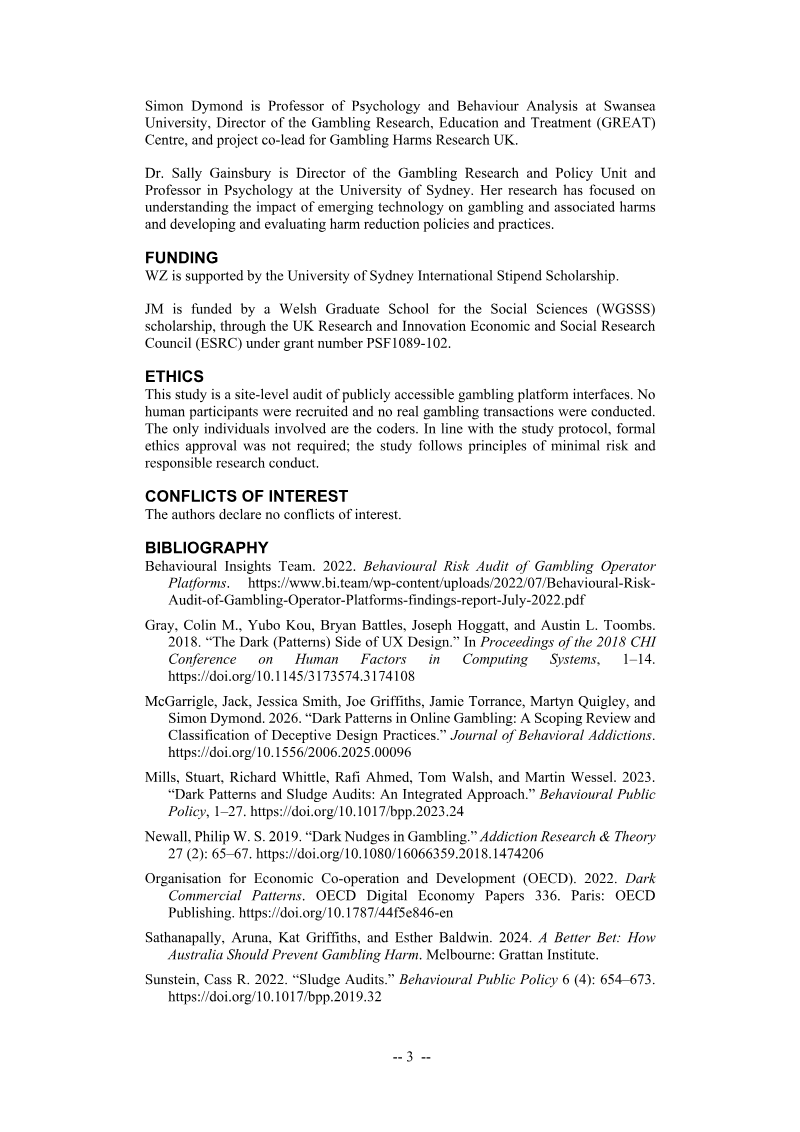

DiGRA · 2026
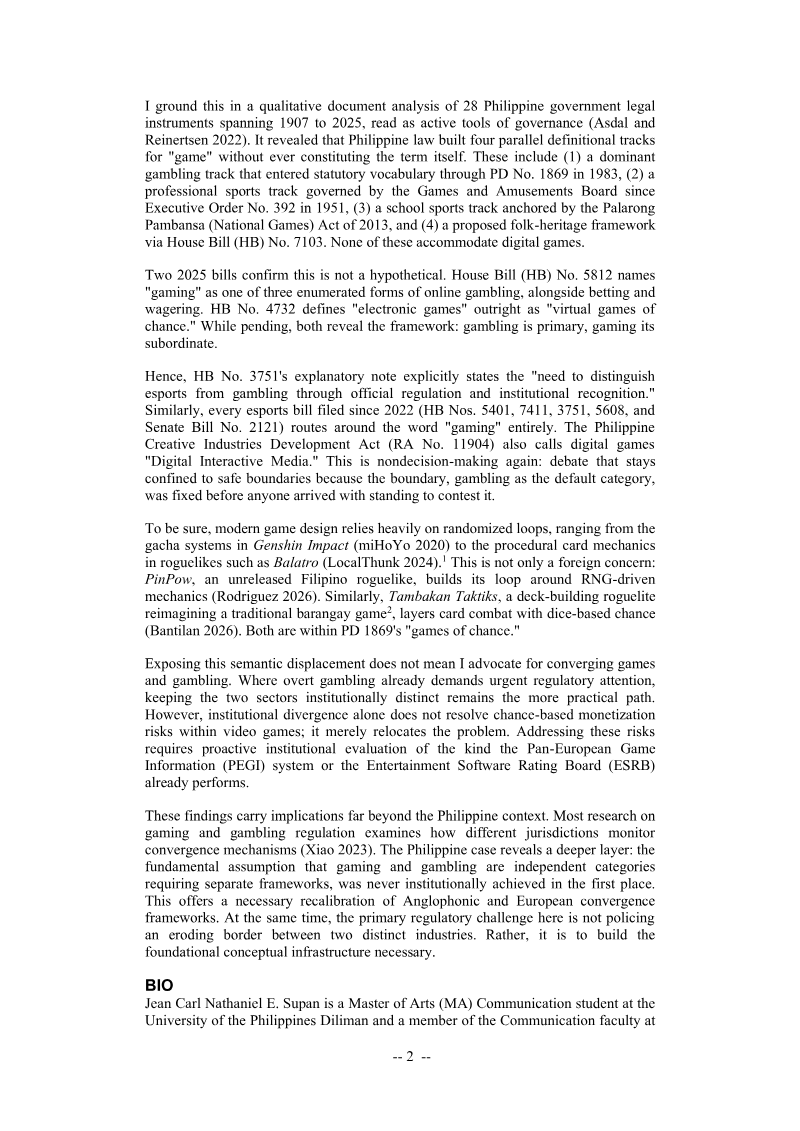
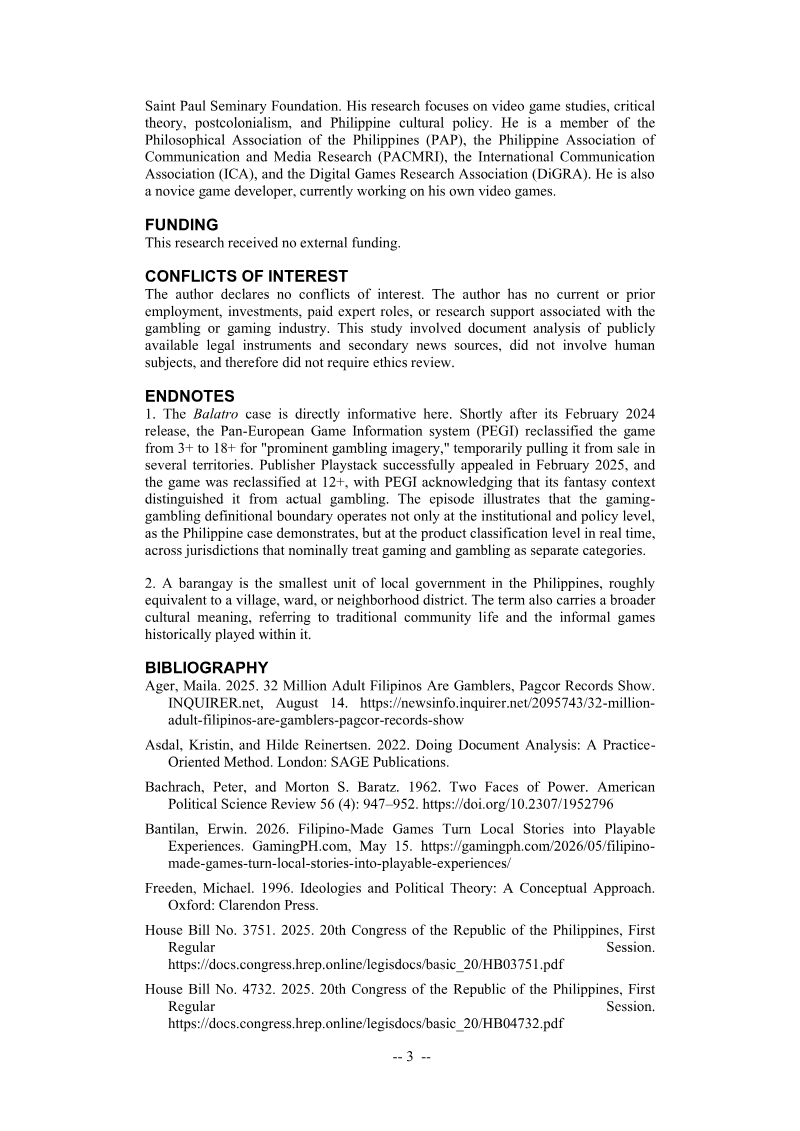
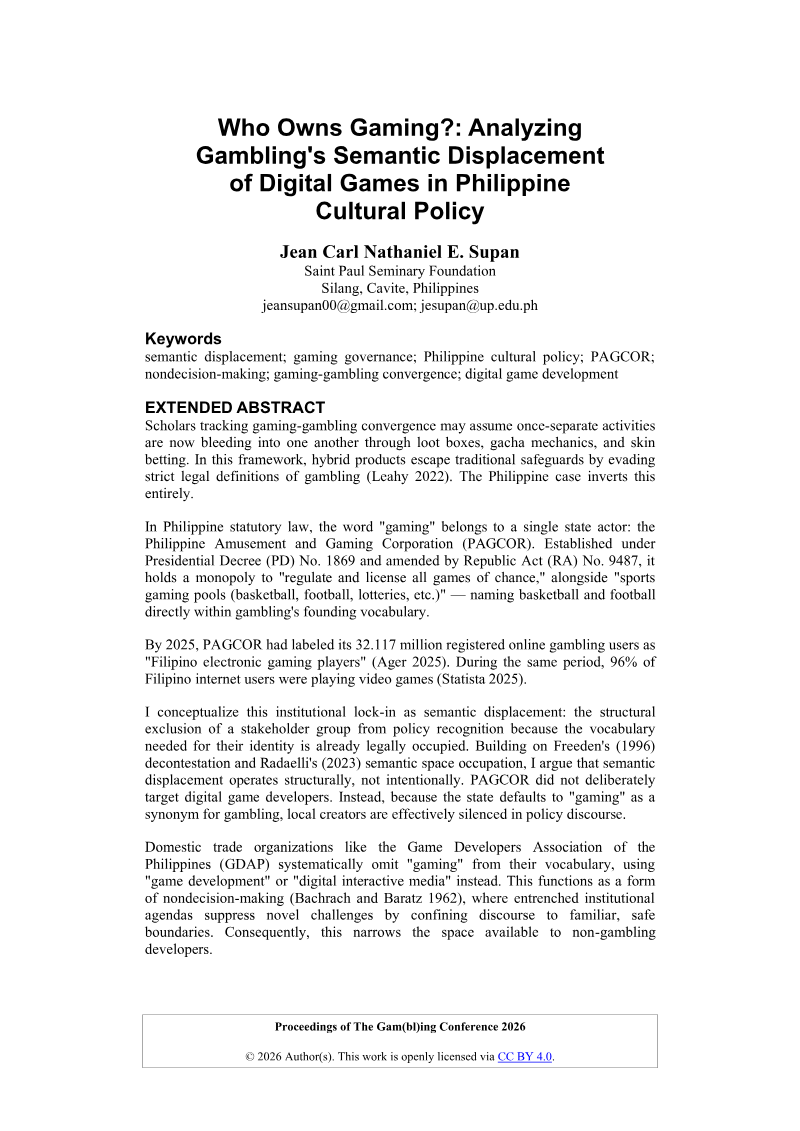
DiGRA · 2026
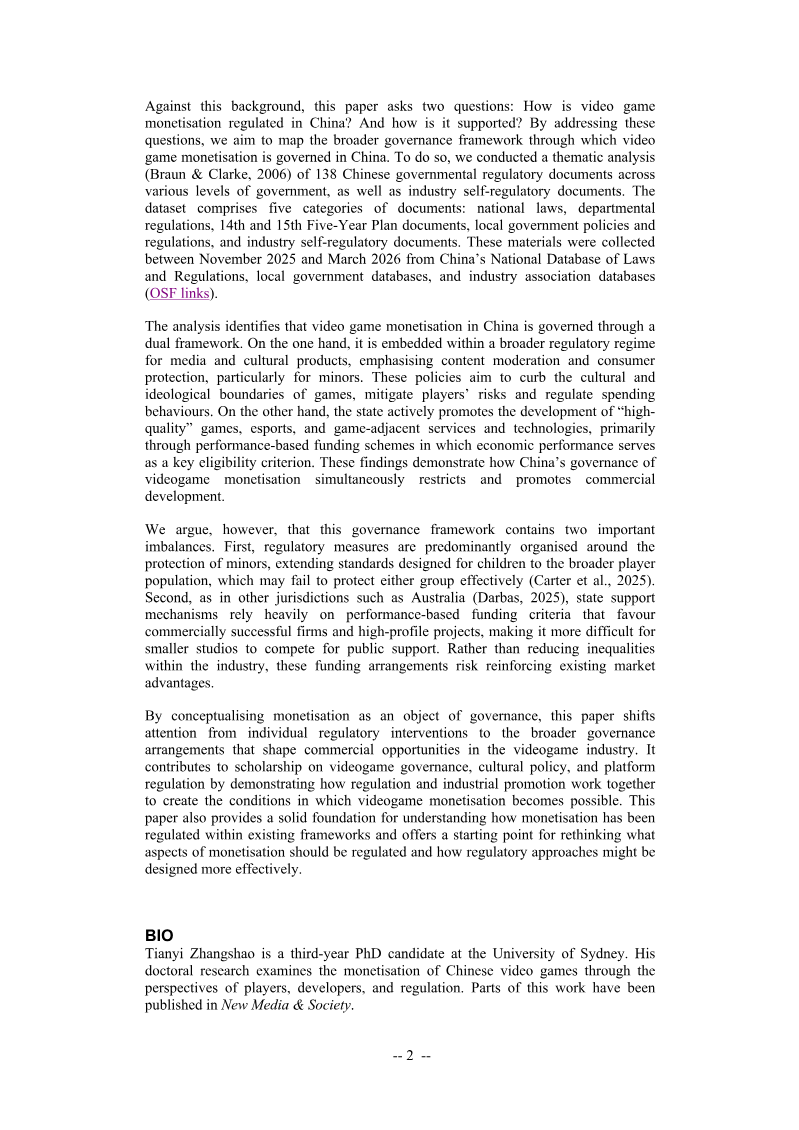
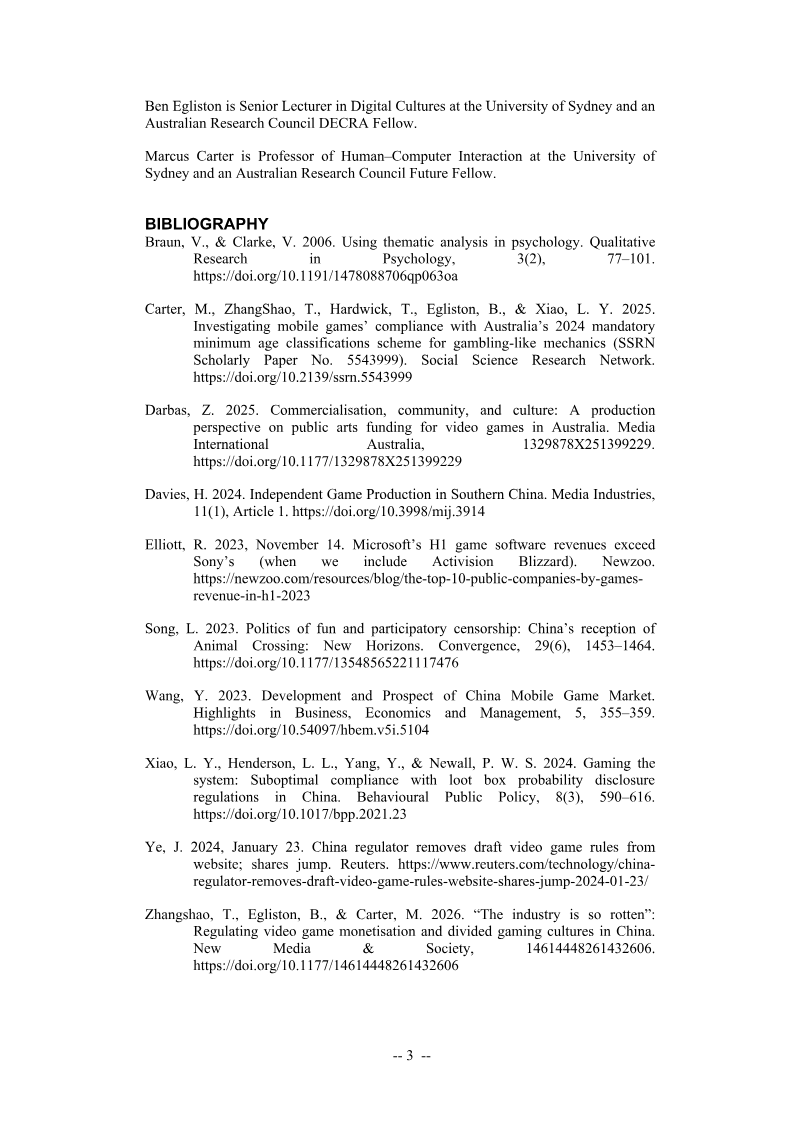
DiGRA · 2026
DiGRA · 2026
DiGRA · 2026
DiGRA · 2026
DiGRA · 2026
DiGRA · 2026
Sungkyunkwan University · 2026