Loading the document
1 free read left. Create a free account for unlimited reading + AI research.
Create free accountArticle DiGRA
1 free read left. Create a free account for unlimited reading + AI research.
Create free accountArticleDiGRA
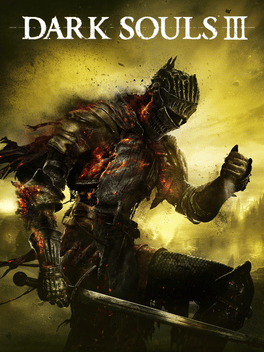
The document calls Disney's Haunted Mansion and FromSoftware's Dark Souls III playgrounds of interpretation. It argues they resist a single authoritative story.
This analysis introduces the concept of "playgrounds of interpretation," a spatialized narrative design that actively resists hermeneutic closure by presenting non-sequential signifiers, thereby encouraging continuous communal negotiation of shared realities. The central thesis posits that these understudied spaces are crucial for understanding video game narrative structures and the emergent communities they foster. The framework draws upon hermeneutics, performance theory, fan studies, and visual media analysis to examine how such designs elicit interpretive play and community engagement extending beyond fictional boundaries.
The analysis highlights two primary examples: Disney's The Haunted Mansion and FromSoftware's Dark Souls III, particularly its "Painted Worlds" motif. The Haunted Mansion is presented as a "generically evocative space" that uses a montage of resonant, non-sequentially linked images to evoke the horror genre without a specific narrative, prompting active audience interpretation and external investigation by fan communities. Similarly, the Dark Souls series, through its ambiguous imagery and concepts like "fire" and the act of "painting," encourages players to engage in a continuous, collaborative process of meaning-making.
A key finding is that these interpretive playgrounds foster community through the ongoing negotiation of potential meanings, blurring the distinction between audience and player. This collaborative meaning-making is likened to a "rehearsal" for a new world, emphasizing the radical potential of video games to orient interpretive play towards self-awareness. However, the analysis also acknowledges the inherent risk of exploitation within such communities. The scope of the analysis is theoretical, drawing on examples from specific entertainment attractions and video game series to illustrate a broader framework for understanding narrative design and community formation.
Each row is a game or company this document names, each column a document, oldest first. A mark means that document names it. Select a row to see those documents.
DiGRA · 2026
Sungkyunkwan University · 2026
DiGRA · 2026
DiGRA · 2026
DiGRA · 2026
DiGRA · 2026
DiGRA · 2026
DiGRA · 2026
DiGRA · 2026
DiGRA · 2026
DiGRA · 2026
DiGRA · 2026
DiGRA · 2026