1 free read left. Create a free account for unlimited reading + AI research.
Create free accountArticle Deconstructor of Fun
1 free read left. Create a free account for unlimited reading + AI research.
Create free accountArticleDeconstructor of Fun
The world's largest mobile game is maintained by a team of fewer than 20 developers, with minimal art outsourcing.
Like a small, agile startup outperforming larger corporations with extensive resources.
Clash Royale's sustained hold on players is analyzed through seven interlocking design and live-ops factors, written by a mobile game industry commentator who calls it the best touchscreen game ever made. The piece frames the game as a commercial outlier: roughly 200 million downloads and about one billion dollars in in-app purchases since its early 2016 launch, with a likelihood of eventually out-earning Clash of Clans, unlike most sequels in comparable franchises.
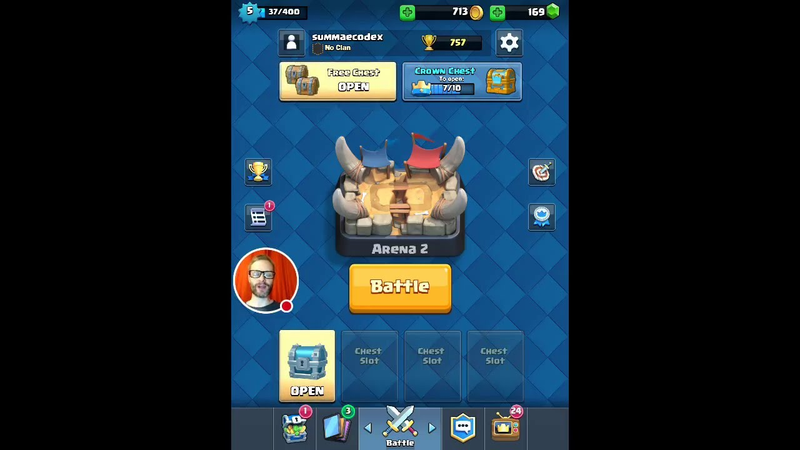
The core argument is that retention emerges from systems that reinforce one another. Bi-monthly updates built around new cards are staged through paid events, community hype, and a slow drip of roughly three cards over two to three months, keeping the metagame fresh while a team of under 20 developers avoids the content treadmill that requires 100 or more staff at rivals. Treasure Chests act as an appointment mechanic, throttle content progression without feeling like an energy system, and give players a positive start to each session after punishing losses. Session lengths span five seconds to several hours, yet progress is gated by a single chest timer, so heavy players gain skill but not much faster card levels, preserving monetization.
Further factors include tournaments and rotating events, which let players test new decks without ladder penalties and remain effective because they are scarce; a tightly balanced metagame in which every card has a counter, pushing losing players to experiment, engage the community, or spend; clans that supply cards while demanding donations and trophy growth, creating social accountability; and friends who pull lapsed players back.
The conclusion tempers the praise, noting the long-term grind and the small team's difficulty meeting content demand, since a new card every two months is insufficient. The author argues that clones, such as Star Wars: Force Arena, add IP or mechanics but face slim odds of sustainable success, and urges developers to apply these fundamentals. The analysis is qualitative and opinion-driven, based on the author's experience rather than a formal dataset.
Deconstructor of Fun · 2026
Deconstructor of Fun · 2026
PocketGamer.biz · 2023