1 free read left. Create a free account for unlimited reading + AI research.
Create free accountArticle Mobile Dev Memo
1 free read left. Create a free account for unlimited reading + AI research.
Create free accountArticleMobile Dev Memo
High barriers to entry characterize the mobile gaming industry, leading to incremental rather than disruptive innovation.
Market Maturity. The mobile gaming industry has reached a state of maturity where high barriers to entry favor large incumbents.
Mobile gaming entered 2018 after a strong 2017, with Newzoo raising its smartphone gaming revenue estimate to $39.1BN from $35.3BN, King rebounding under Activision Blizzard, and Zynga and Glu engineering apparent turnarounds. The central thesis is that the market has matured and become predictable: barriers to entry are so high that innovation is most likely to come from large incumbents, producing measured, incremental change rather than disruption. Notable 2017 developments included successful IPOs from Rovio, NetMarble, and Next Games, the growth of Facebook Instant Games with in-app purchases and advertising, Apple's ARKit launch, and more sustainable dominance of download charts by hyper-casual publishers such as Cheetah Mobile, Miniclip, Gram Games, and Voodoo.
Three predictions follow. First, the Top Grossing chart will undergo a fundamental reshuffle in the 1-25 range. Older "Perennial" games from the 2012-2013 vintage have struggled to hold Top 10 positions, non-gaming apps are monetizing better through subscriptions, and newer titles like Golf Clash, Toon Blast, and Homescapes are climbing. One Perennial is expected to exit the Top 10 and one new entrant, possibly a 2018 launch, to join it durably, while the 25-50 range grows more volatile from subscription renewals and improved live operations.
Second, consolidation will continue with at least one acquisition in the $500MM-$1BN range. 2017 deals included Zynga's purchases of Harpan and Peak Games' card studio, Aristocrat's acquisitions of Plarium and Big Fish, Double U's purchase of Double Down, Take-Two's SocialPoint deal, Nexon's Pixelberry deal, and Outfit7's sale to a Chinese chemical company. Deals of $10-50MM for declining hit studios should accelerate, $50-250MM deals should hold steady, and several eSports acquisitions are likely. MZ and Playrix are the leading mega-deal candidates, with Roblox, Product Madness, and Peak Games also mentioned.
Third, the "app intelligence" industry will lose relevance. Growing advertising revenue and subscription pricing make revenue estimates, especially for the top 20 grossing apps, increasingly unreliable. Because many top apps are now published by public companies, actionable revenue data can be triangulated from financial disclosures, further weakening the use case for third-party estimates.
 AppleCompany · United States · founded 1976 · 1,769 documents
 RobloxCompany · Game company · 1,178 documents
 ActivisionCompany · United States · founded 1979 · 784 documents
 Activision BlizzardCompany · Game company · 590 documents
 Take-Two InteractiveCompany · United States · founded 1993 · 431 documents
 ZyngaCompany · United States · founded 2007 · 401 documents
 RovioCompany · Game company · 232 documents
 VoodooCompany · France · founded 2013 · 178 documents
 NexonCompany · Japan · founded 1994 · 119 documents
 HomescapesGame · Playrix · 2017 · 98 documents
Each row is a game or company this document names, each column a document, oldest first. A mark means that document names it. Select a row to see those documents.

Mobile Dev Memo · 2026
Deconstructor of Fun · 2026
Two & a Half Gamers · 2026


Newzoo · 2026
Deconstructor of Fun · 2026
Two & a Half Gamers · 2026
Deconstructor of Fun · 2026
Naavik · 2026
Two & a Half Gamers · 2026
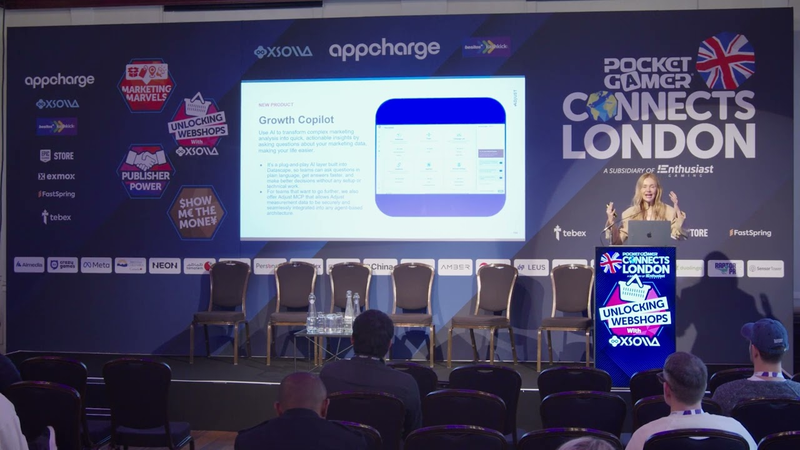
PocketGamer.biz · 2026
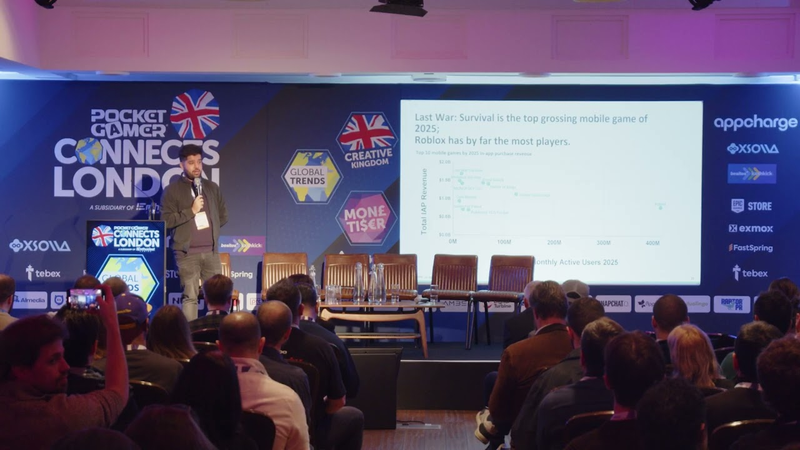
PocketGamer.biz · 2026
Aream & Co · 2026
InvestGame · 2026