Loading the document
1 free read left. Create a free account for unlimited reading + AI research.
Create free accountArticle GameMakers
1 free read left. Create a free account for unlimited reading + AI research.
Create free accountArticleGameMakers
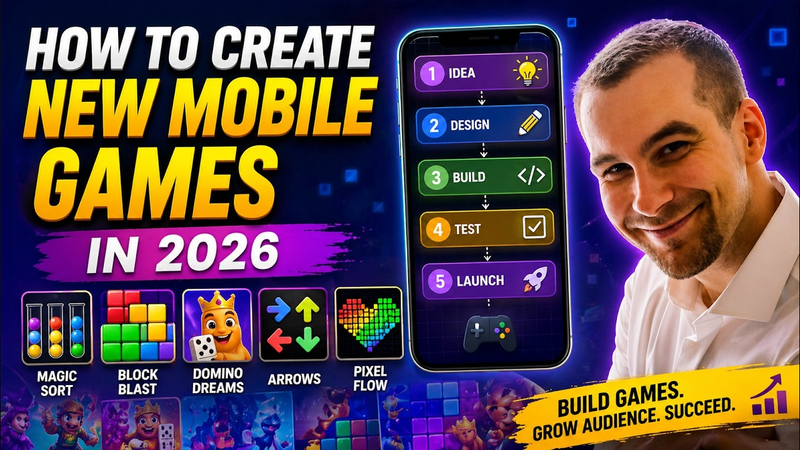
Joseph Kim presents a problem-centric framework for designing a +1 mobile game. It fixes a base game's biggest weaknesses while preserving what already works.
Joseph Kim presents a "problem-centric" framework for designing a "+1" mobile game, meaning a new title that meaningfully improves on an existing successful design rather than making a minor tweak. The core thesis is that designers maximize their odds of success by fixing a base game's biggest weaknesses while preserving the elements that already make it work. Written in 2014 for the F2P and mobile games audience, the framework is conceptual and practitioner-oriented, with no survey data, statistics, or empirical sample behind it.
The process has five steps. Designers first select a base design, either an older concept that has been neglected or lacks competition, or a newly emerged one with room for major expansion. Next they identify the top three Key Problems with that design, prioritizing user and gameplay issues over monetization. Probing questions help surface these, such as where players stopped playing, what would make the game more fun, who the target audience is, and what would prompt a recommendation to a friend. Third, they identify the top three Critical Success Factors, defined as the elements whose removal would cause the base game to fail.
The fourth step is brainstorming a solution set that addresses the Key Problems while ideally improving the Critical Success Factors, without interfering with what already drives the game's success. A guiding rule holds that any feature that neither solves a Key Problem nor advances a Critical Success Factor should be cut unless there is a compelling reason to keep it.
The final step is validation before any code is written. Designers build a full set of mockups or wireframes organized around screens and flows, load them into a prototyping tool, and put them in front of new users with an interview guide. Those sessions test whether the prototype resolves the identified problems and also whether the original problem and success-factor assumptions were correct. Rapid iteration through this loop is meant to reveal a design's market potential at minimal cost.
GameMakers · 2026

GameMakers · 2026
GameMakers · 2026
GameMakers · 2026

GameMakers · 2026

GameMakers · 2026

GameMakers · 2026

GameMakers · 2026

GameMakers · 2026

GameMakers · 2026

GameMakers · 2026

GameMakers · 2026



European Conference on Games Based Learning (ECGBL) · 2026