LegalPlayWay
Poprzednie Brzmienie Zmienionych Postanowień Statutu Spółki
7 Aug 20201 pages~2 min full read
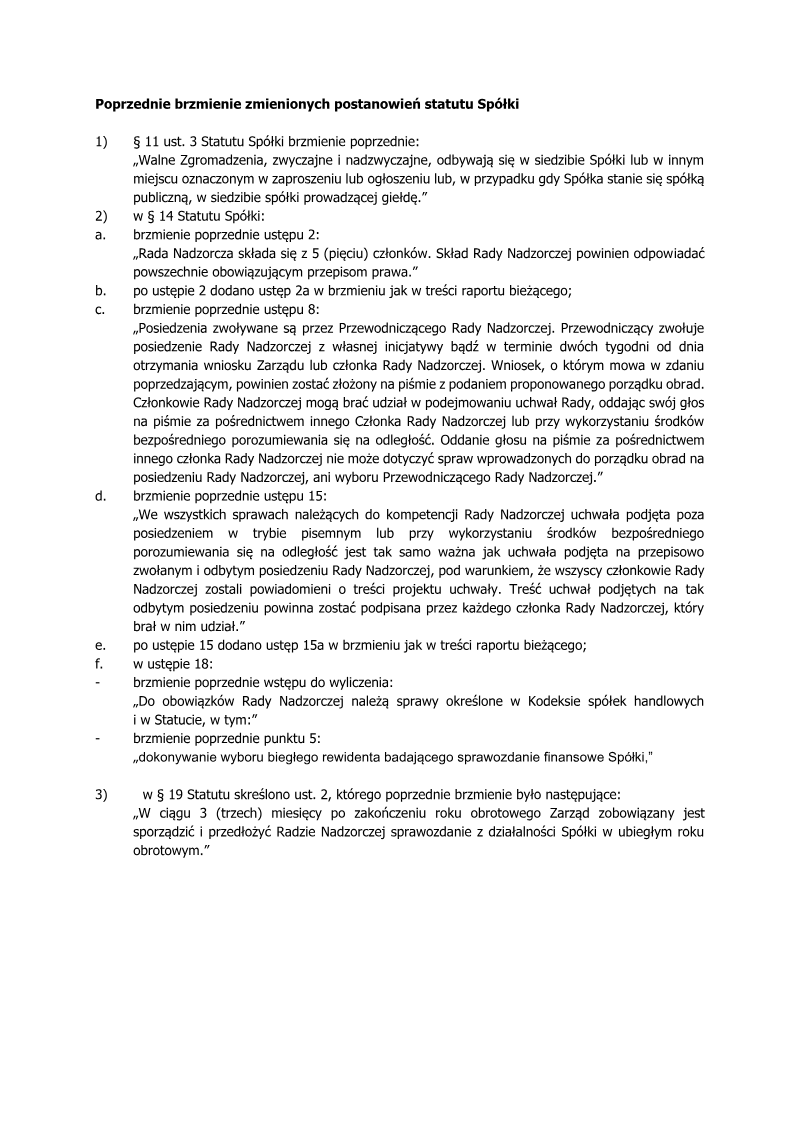
The corporate governance framework of the entity underwent significant structural revisions, specifically targeting the operational protocols of the General Meeting, the Supervisory Board, and the Management Board. These amendments reflect a transition toward modernizing administrative procedures and aligning with public company standards. A primary focus of the changes involved the location of General Meetings, which were previously restricted to the company’s headquarters or the seat of the stock exchange operator should the company become public. This indicates a strategic preparation for potential or existing public market participation.
The Supervisory Board's composition and procedural flexibility were also central to these updates. Prior to the changes, the board was fixed at five members and operated under strict meeting protocols. The previous regulations allowed for remote voting and written resolutions, provided all members were notified of the draft content, but maintained specific restrictions on voting via proxy for matters introduced during a meeting or for the election of the Chairperson. Furthermore, the board held the explicit authority to select the statutory auditor for financial statements, a standard oversight function that has been refined through these statutory modifications.
Administrative timelines and reporting obligations were also streamlined, notably through the removal of specific clauses regarding the Management Board's reporting window. Previously, the Management Board was required to submit an annual activity report to the Supervisory Board within three months of the fiscal year's end. By documenting these previous versions of the statutes, the entity establishes a clear legal baseline for its evolving governance structure, ensuring compliance with the Commercial Companies Code while adapting its internal regulations to better suit the demands of the contemporary corporate and regulatory environment.
PlayWay · 2026
PlayWay · 2026
PlayWay · 2026
PCF Group · 2025
PlayWay · 2025
PlayWay · 2025
PlayWay · 2025
PlayWay · 2025
PlayWay · 2025
PlayWay · 2025
PlayWay · 2025
PlayWay · 2025
11 bit studios · 2025
PCF Group · 2025
PCF Group · 2025
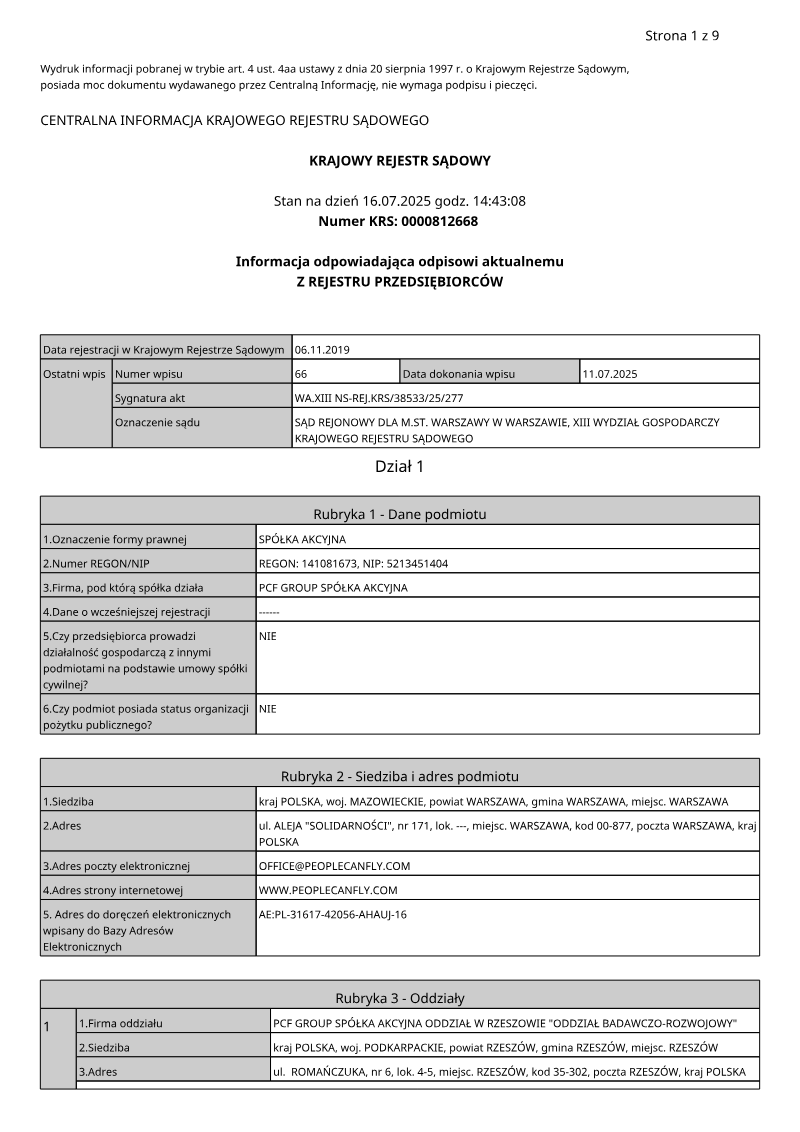
Centralna Informacja Krajowego Rejestru Sądowego · 2025
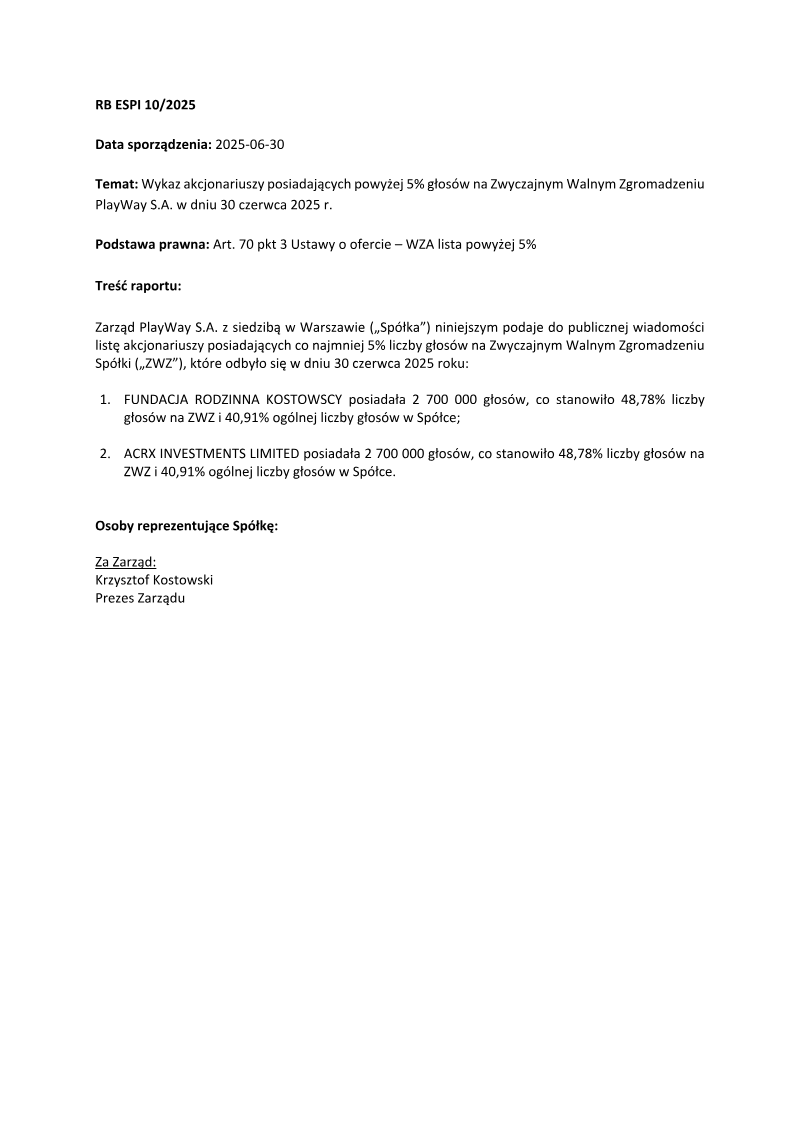
PlayWay · 2025
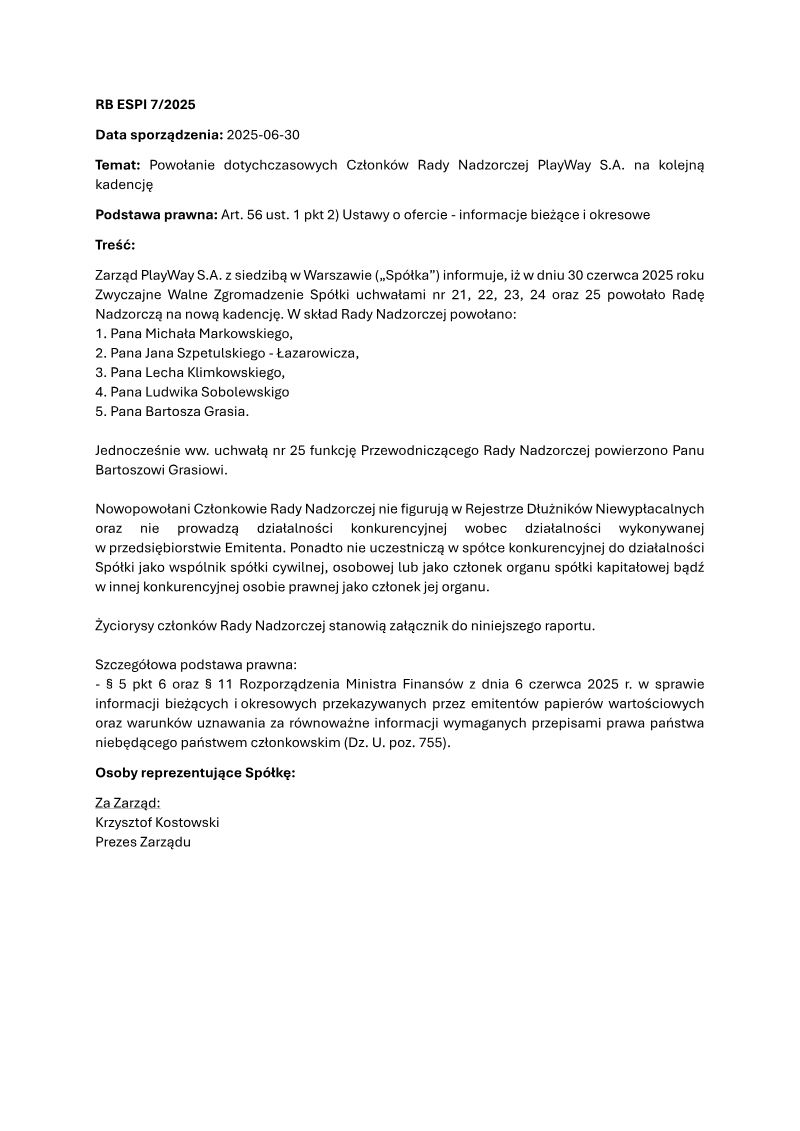
PlayWay · 2025
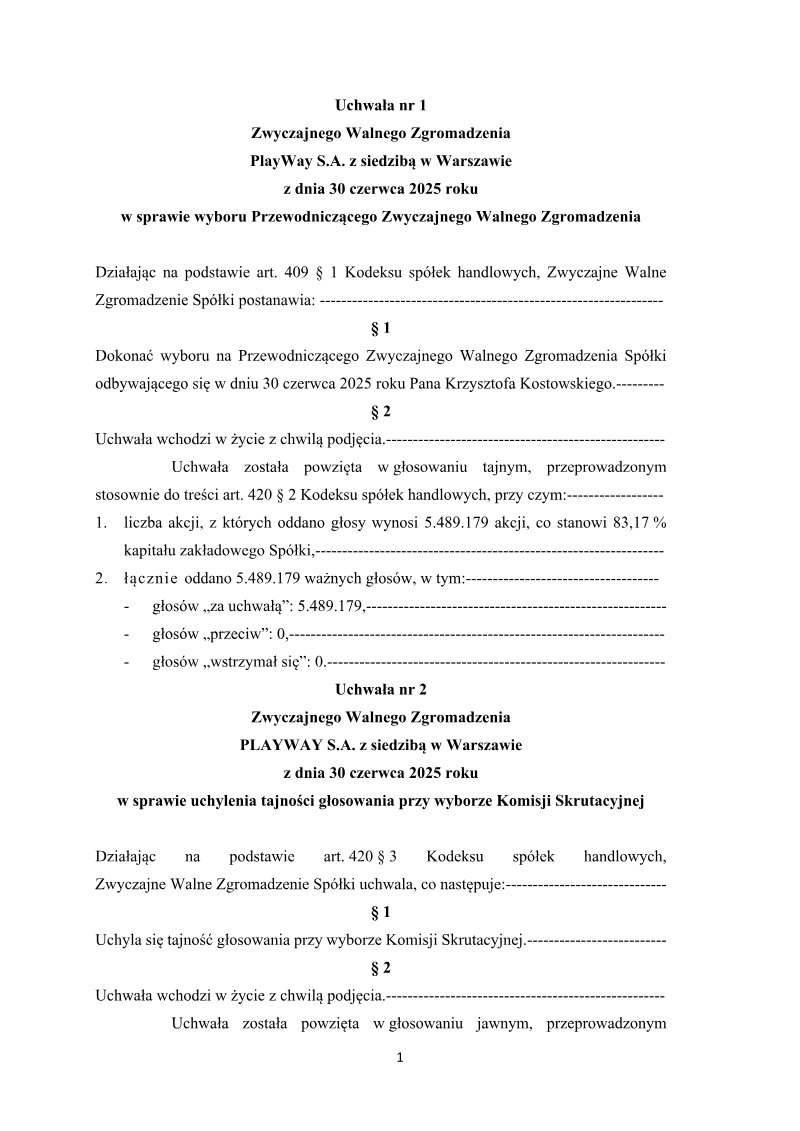
PlayWay · 2025
PlayWay · 2025